Category: World


“Santiago Calatrava, one of the most famous contemporary architects, has arrived in Belgrade after being invited by the Belgrade Philharmonic Orchestra Foundation Zubin Mehta.

This Spanish architect, acknowledged and famous as both engineer and sculptor, is part of the elite of modern architecture whose works decorate cities on three continents.

Calatrava’s early career was dedicated largely to bridges and train stations, whose designs elevated the status of civil engineering projects to new heights. His Montjuic Communications Tower in Barcelona, Spain (1991) in the heart of the 1992 Olympic site, as well as the Allen Lambert Galleria in Toronto, Canada (1992), were important works and turning points in his career, leading to a wide range of commissions. The Quadracci Pavilion (2001) of the Milwaukee Art Museum was his first building in the US. Calatrava’s entry into high-rise design began with an innovative 54-story-high twisting tower called Turning Torso (2005), located in Malmo, Sweden. Calatrava’s structures, mainly made of concrete, glass and steel, are also famous for defying the laws of gravity.

During the two-day stay in Belgrade, Mr. Calatrava will talk with the officials of the Foundation about its projects, and one of the topics should be the vision of the new building of the Belgrade Philharmonic Orchestra.”

The Belgrade Philharmonic Orchestra prepared very concise  and thoroughly elaborated concept  of the house of music with the characteristic title: The Rose of Civilisations. The chosen location is at the delta of Sava and Danube rivers, thus The Rose of Civilisations will powerfuly seal off the bloody chapters of the past and open the peaceful future.

MV

Source:

http://www.jutarnji.hr/kultura/umjetnost_i_dizajn/

http://livinginbelgrade.com/Santiago_Calatrava_visiting_Belgrade

The Metropolitan Opera’s opening-night gala traditionally begins with  “Das Rheingold,” the first of Wagner’s “Ring” operas, but instead of an old conductor James Levine, this time with the director Robert Lepage’s new production, the first installment of a complete “Ring” cycle.


“Mr. Lepage’s “Rheingold” is the most intensely anticipated new production the Met has mounted in years. For the most part it was an impressive success: an inventive, fluid staging and a feat of technological wizardry that employs sophisticated video elements without turning into a video show.Wagner buffs tend to be a fanatical sort, and no doubt there will be debate about Mr. Lepage’s work. Here he received a mostly enthusiastic ovation with scattered boos. I had mixed feelings,”  Anthony Thommasini stressed at the New York Times.

MV

More:

http://www.nytimes.com/2010/09/29/arts/music/29met.html

German Oscar-nominated directors Wim Wenders and Werner Herzog unveiled features that push the limits of 3D cinema, which until now had been a money-spinning vehicle for mass-market movies like “Avatar” and “Toy Story 3.”

Art-house cinema broke into the next dimension at the Berlin film festival (10th-20th February) Sunday with hotly awaited 3D premieres from European veterans seeking to reclaim the format from Hollywood blockbusters. Wenders’s “Pina,” which showcases the work of the late German choreographer Pina Bausch, had been years in the planning. The picture takes the choreography from the rehearsal stage to the city’s roughly beautiful industrial spaces. Intercut are interviews with the performers, who were still mourning Bausch’s loss, adding a deep emotional undercurrent to the film.

Herzog’s documentary “Cave of Forgotten Dreams” shines a light on what are believed to be the world’s oldest cave paintings, in southern France (the Chauvet Pont d’Arc cave in the Ardeche valley). A specially built hand-held camera captured the paintings in relief, revealing how the ancient artists used the grotto’s own contours to add nuance to their work.

The Berlin film festival runs until February 20.

MV

More:

http://www.thelocal.de/society/20110213-33081.html

WHW curatorial collective from Zagreb has announced  that the concept for the next Croatian Pavilion at the Venice Biennale is going to be based on the artworks by performance artist  Antonio Lauer aka Tom Gotovac and performative collective BADco. while exibited at Arsenale.

WHW initiated the project  in 1998 when independent alternative publishing house Arkzin published 150th anniversary edition of the Marx’s Communist Manifesto with an introduction by Slavoj Zizek, took its shape in the area in which the considerations about possibilities of political and artistic engagement were interlocked with issues of local daily politics. The collective has curated a wide range of international exhibitions around the world, most notably the Istanbul Biennale 2009.

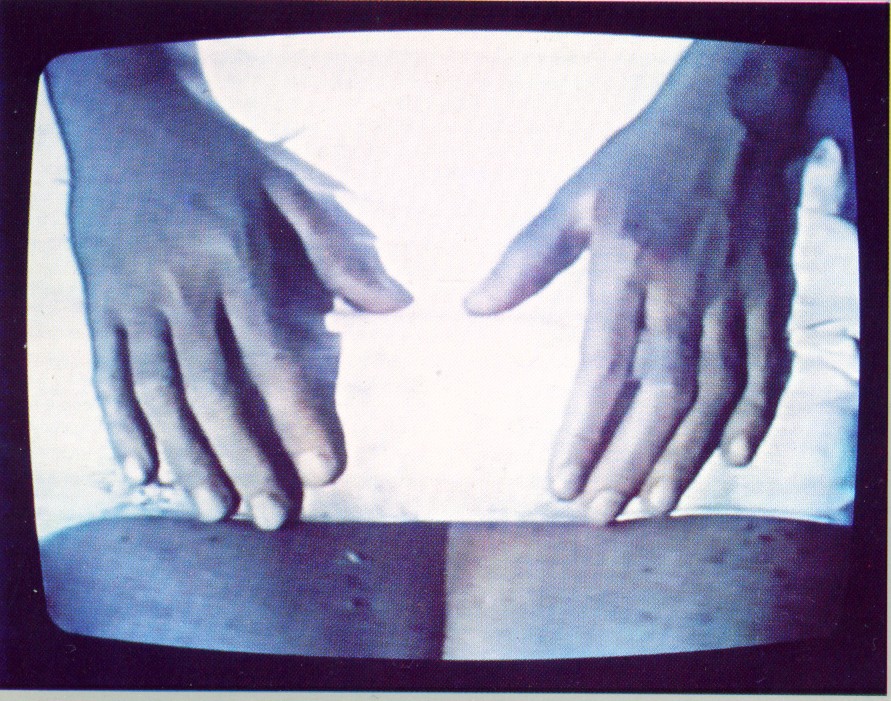
Many years of consistent work in the field of experimental film and performance, made Tomislav Gotovac one of the most important Croatian contemporary artists. Gotovac began to transfer daily activities to art sphere with public performances such as Haircut and Shaves (1970, 1971) Watching TV (1980). In 1971 he acts in Lazar Stojanović’s film Plastic Jesus. The film was banned due its subversive content and Gotovac was not allowed to graduate till 1976. In 1971 Gotovac have run naked through Belgrade’s Sremska Street. The performance was reencted ten years later in Zagreb’s main street Ilica for Zagreb, I love you (running naked, kissing the asphalt) performance, which shocked dormant environment. In 2005 Gotovac has changed his name to Antonio Lauer. He died in 2010.

BADco. is a collaborative performance collective based in Zagreb, Croatia. Reconfiguring established relations between performance and audience, challenging perspectival givens and architectonics of performance, problematizing of communicational structures – all of that makes BADco. an internationally significant artistic phenomenon and one of the most differentiated performance experiences.

MV

More:

http://www.culturenet.hr

Zaha Hadid Architects have designed two prototype villas for a site overlooking the historic town of Dubrovnik in Croatia. The total development comprises 400 villas, two 5* hotels, luxury apartments, retail facilities, a spa and an 18 hole golf course including a golf resort club house.

The concepts, named “Rock” (left) and “Shell” (right), have been developed to help define the architectural style of the resort, which will eventually consist of 400 villas plus hotels and a golf course. The area of development is located north of Dubrovnik, a Unesco World Heritage Site. The land comprises 430 hectare and is located on a high plateau approximately 300m to 400m above sea level, north of the old town of Dubrovnik.

Design concept has a highly expressive, sculptural quality, infused with a sense of light and space. Light and views are the driving forces of the house.

MV

Source:

http://www.dezeen.com/2011/02/07

A famous American journal for design  How has chosen Croatian poster for the Festival of European short stories 2010, between the ten best posters in the world. A creative poster is Maja Bagic Baric and Danijel Srdarev‘s  work of art.

At this year’s How’s competetion  How Poster Design Awards there were 800 authors entered from the whole world, but just ten of them were chosen as  the best. This is not the first collaboration of Bagic and Srdarev: for the same festival they won the gold in 2007 at the Graphis Poster Annual in New York, and were found themselves close to the biggest designers as Miltona Glaser and agencies like Pentagram Design, Penguin Design, Apple Computers, Ogilvy and Mather, and 2008 was a successfull year as well while competing  at ‘The Undiscovered Letter’ in famous gallery for visual communications Art Directors Club New York.

One of the winners is also the Croatian illustrator and designer Mirko Ilic with the work ‘Nuclear Power Plants’. He has been famous for his working as an art director in Time and The New York Times during 1980’s.

MV

Source:

http://www.culturenet.hr/

One of the longstanding promises of the Internet–of the last century’s worth of technology, really–is that the cultural heritage of the world will be accessible to everyone in their homes. Today, the global museum has taken another step forward with Google Art Project.

An ingenious application of Google’s Street View and Picasa tools, it allows web browsers to wander the halls of 17 museums around the world (New York City’s MoMA, Amsterdam’s Rijksmuseum, the Hermitage in St. Petersburg, and others).

Some particularly significant artworks in each of the museums (about a thousand total, although more will apparently follow) can be viewed straight-on, in ultra-high resolution. In some cases, that just means a very tight close-up view; others are so detailed that you can make out the grain of individual brushstrokes–a closer view than you’d ever be able to get in person. There’s also explanatory text for the individually viewable works.
Read more:

http://www.googleartproject.com/c/faq

http://techland.time.com/2011/02/01/google-art-project-launches-why-its-amazing/#ixzz1CoRras7r

MV

Using a single Xbox Kinect and standard graphics chips, MIT (Massachusetts Institute of Technology) researchers demonstrate the highest frame rate yet for streaming holographic video.

At the Society of Photo-Optical Instrumentation Engineers’ (SPIE) Practical Holography conference in San Francisco the weekend of Jan. 23, members of Michael Bove’s Object-Based Media Group presented a new system that can capture visual information using off-the-shelf electronics, send it over the Internet to a holographic display, and update the image at rates approaching those of feature films.

The researches are confident that with a little more time, they can boost the rate of 15 frames per second even higher, to the 24 frames per second of feature films or the 30 frames per second of TV — rates that create the illusion of continuous motion.

http://web.mit.edu

MV

From 7 to 17 April, the 2011 ISCM World New Music Days are taking place within the 26th Music Biennale Zagreb 2011 in Croatia. Theme of the festival is Mirabilia Memorabilia.

The 26th Biennale, while celebrating 50 anniversary, will host the Inernational Society for Contemporary Music ISCM–World New Music Days 2011 Festival, which is once again returning to Zagreb, one of the few metropolises in the world the ISCM has chosen to host this festival. As much as 259 compositions by 51 sections entered into the open competition, along with 140 individual entries from all over the world.

The compositions are carefully selected by a panel of distinguished artists who met in Zagreb October 15th-17th: Luc Brewaeys (Belgium), Benet Casablancas (Spain), Lojze Lebic (Slovenia), as well as Marko Ruždjak and Nikša Gligo (Croatia). The panel’s work is overseen by the artistic director of the Music Biennale Zagreb Mr. Berislav Šipuš, and the selected compositions will be performed by orchestras coming from all over the world which are participating in the Biennale programme http://www.mbz.hr/eng/mbz_2011/program .

MV

Source:

http://www.mbz.hr/eng/press

http://www.iscm.org/

After Marina Abramovic’s  famous performance  at Moma in New York last year, here comes another great performer, Croatian artist – Sanja Ivekovic. Born in 1949 in Zagreb Ivekovic  is among the most influential feminist artists and activists in European and global context.

By using very different media (video, performance, installations, and non-artistic media such as newspaper ads, postcards, or posters), she began discussing very early the mechanisms of social identity construction, placing an emphasis on the female identity as subject to social expectations and stereotypes since the ancient times.

“In her persistent exploration of the border between the public and private self, Iveković subtly insinuates the collective responsibility we share for the things that take place around us. By doing so, without any moral exhortation, her art permits us to see more clearly the interdependence of things and the scalability of our actions, from small gestures to grand narratives.”

Photo: Triangle

(Ivekovic performed a provocative Triangle alone on her Zagreb balcony: She read, drank whiskey, and pretended to masturbate at the moment Tito’s motorcade passed by. The triangulation involved not only three offending actions but a policeman stationed on a nearby roof, who she knew would see her, and the officer he summoned, who rapidly arrived.)

MV

Source:

http://www.msu.hr/#/en/300038/

http://vanabbemuseum.nl/

MIT Media Lab introduces new inFORM’s Dynamic Shape Display “that can render 3D content physically, so users can interact with digital information in a tangible way. inFORM can also interact with the physical world around it, for example moving objects on the table’s surface. Remote participants in a video conference can be displayed physically, allowing for a strong sense of presence and the ability to interact physically at a distance. Learn more and watch video of inFORM in action on the Tangible Media research group website: http://tangible.media.mit.edu/project/inform/”

But shape-shifting technology is far away from human transformations…

MV

Source:

media.mit.edu

tangible.media.mit.edu

latimes

At the Kunsthalle Wien where the exhibition POWER UP – Female Pop Art is opened till March, you can find out  that except famous artists Warhol, Lichenstein, Wesselmann, Rauschenberg – there were hardly available, powerful women as well!

“Rediscovering outstanding women Pop artists, POWER UP fulfills Dorothy Iannone’s combative promise after fifty years. The show aims at the reinterpretation of an art movement that until today has primarily been associated with male protagonists. Plastic, loud colors, reduced forms, and graphic contours – the nine women artists’ works on display resemble those of their male colleagues in many respects. Whereas their works appeal to the taste of the masses, these artists, as pioneers of Feminism, have remained belligerent and critical. They reveal the consumer culture’s superficiality, exposing the commodity myth as an empty shell like Christa Dichgans, ironically transforming everyday objects to oversized kitsch objects like Jann Haworth, or exploring mass media clichés and superstar constructions like Rosalyn Drexler. Like Sister Corita, a committed peace activist, they took a clear stand on the sixties’ social and political events such as the Vietnam War.

The exhibition pursues its political perspective in those instances where the era’s current notions of what a woman is are revised by different views: Kiki Kogelnik and Marisol describe the corset in which the representation of women by themselves and by others is caught, while Evelyne Axell or Dorothy Iannone provocatively display the nude body, love, and sexuality, and, like Niki de Saint Phalle, attract the viewer’s attention with sophisticated modes of self-presentation.”  (Curator: Angela Stief)

MV

Source:

http://www.kunsthallewien.at

A Christmas tree made entirely of recycled bicycles is unveiled at the Rocks on November 19, 2010 in Sydney, Australia.
The bikes and parts for the tree were provided by recycling group, CMA Corporation, and will remain on display until 28 December when it will be returned to the corporation for recycling.
“The Rocks Christmas tree is made from the recycled parts of up to 100 bicycles. The tree-cycle is the third Christmas tree made from Recycled materials by Sydney Harbour Foreshore Authority. This year’s tree stands approximately seven meters tall and took eight weeks to design and build.”

In 2008, the selected media was chair, 2009 was a year of recycled bottles, and this year  organizers go for bike parts.

Photo by Chris Lynch

MV

Source:

http://icetubesblog.com/

http://www.iransdesign.com/search/tree%20cycle%20sydney

Boris Poljak and Damir Cucic won a prize for their film ‘Sky Spirits’,  made in ‘Croatian Film Clubs Association’ production, at the  Alternative Film & Video festival in Belgrade (Serbia). The awarded  authors got a special  bonus – the possibility of producing next film or video work at Academic Film Centre (AFC) in Belgrade.

The experimental film ‘Sky Spirits’ used the documentary recordings of  fireworks as a bases, that have been collected during 2001-2008. They didn’t use computer programmes, but has been created  just by video processing.

Croatian Film Clubs’ Association is an association of non-professional film and video groups operating in Croatia since 1928. Founded in 1963 as the Croatian Cinema Association (and the Centre for Croatian amateur cinema before that), the Association works today as part of the Croatian Technical Culture Union.

Croatian Film Clubs’ Association assembles cinema and video clubs, film groups and individuals from primary school to adult members, encourages their work (providing financing, managing and expert help), contributes to education of mentors and members of film groups, organizes presentations and evaluation of film and video works by children and adult authors, at home and abroad, and works on preservation of best film and video works of non-professional cinema. Since 1992, the Association has been a member of the international organization of non-professional cinema (UNICA).

MV

Source:

http://www.hfs.hr/

Following a recent ceremony in Rabat, Morroco, Agence pour l’Aménagement de la Vallée du Bouregreg (The Bouregreg Valley Development Agency) verified that architectural designs will be provided by .  The program will include three theater spaces, indoor spaces consisting of 2,050-seat and a 520-seat, and a fully-equipped outdoor amphitheater holding up to 7,000 people.

The theaters will share back of house facilities, efficiently reducing the size of the building services needed.  Creative studios will also be incorporated into this cultural venue.  Estimated cost is at 120 Million Euros for the Rabat Grand Theatre.

MV

Source:

http://www.archdaily.com/

http://www.dezeen.com/2010/11/22/rabat-grand-theatre-by-zaha-hadid-architects/

Hyperreality (Baudrillard) or surrogate reality, looks actually like “more real than reality”. It’s not authetic Reality, but sort of Cultural  Affect. “JR owns the biggest art gallery in the world. He exhibits freely in the streets of the world, catching the attention of people who are not the museum visitors. His work mixes Art and Act, talks about commitment, freedom, identity and limit.

After he found a camera in the Paris subway, he did a tour of European Street Art, tracking the people who communicate messages via the walls. Then, he started to work on the vertical limits, watching the people and the passage of life from the forbidden undergrounds and roofs of the capital.

JR creates “Pervasive Art” that spreads uninvited on the buildings of the slums around Paris, on the walls in the Middle-East, on the broken bridges in Africa or the favelas in Brazil.

After these local exhibitions, the images are transported to London, New York, Berlin or Amsterdam where people interpret them in the light of their own personal experience. As he remains anonymous and doesn’t explain his huge full frame portraits of people making faces, JR leaves the space empty for an encounter between the subject/protagonist and the passer-by/interpreter.”

Source:

http://jr-art.net/

As we read at Los Angeles Times, this week Laurie Anderson presented her latest work “Delusion” at UCLA (University of Los Angeles). “Puzzling over our state of affairs, she had come to see images, and our dependence on screens, as a distraction. Delusion combines violin, electronic puppetry, music and visuals. Anderson turned to narrative and music alone, sharing the stage with three backup musicians.

In Delusion, the screens were back. But as Anderson’s mood has turned darker and she has gone deeper and more inward, the beautiful, enveloping video helped keep us in touch with the outside world. Behind her was a cinema-sized backdrop, and three other surfaces of different shapes and materials –- including a sheet-draped settee -– were also used as screens. Anderson appeared alone, dressed in tight white shirt and loose skinny tie, looking both hip and vulnerable. She too, when she covered herself with a sheet, could become a video screen. (…)  In this powerful, moving, incredibly rich work, Anderson has already stripped bare her –- and our –- deepest, most troubling communal delusions.”

(Anderson on Delusion: http://www.youtube.com/watch?v=KoBVBB2iFwg)

MV

Source:

http://latimesblogs.latimes.com/

http://www.uclalive.org/

As a part of the 2010 Melbourne Festival  (8-23 October) one of the world’s most renowned contemporary artists Bill Viola introduces In Conversation and offers a rare opportunity to hear him discuss his remarkable work.

“Throughout the Festival Viola’s Fire Woman and Tristan’s Ascension can be experienced at St Carthage’s Church, The Raft is showing at ACMI and his work is also part of the Mortality exhibition at ACCA.
Ocean Without a Shore is a permanent installation at NGV International until 13 September 2010.”

Video Art enables Video statics, a Zero expression of Art or simultanity and creates deep affections filled with astonishment, thus witnesses “a new economy of seeing”.  It also enables a Video dynamics through electronic processing figuration and montage. You can find out more about this powerful Art extended media in a short presentation  on  VIDEO_ART.

Source:

http://www.melbournefestival.com.au/program

Find out something new  about Photography as an Art extended media .

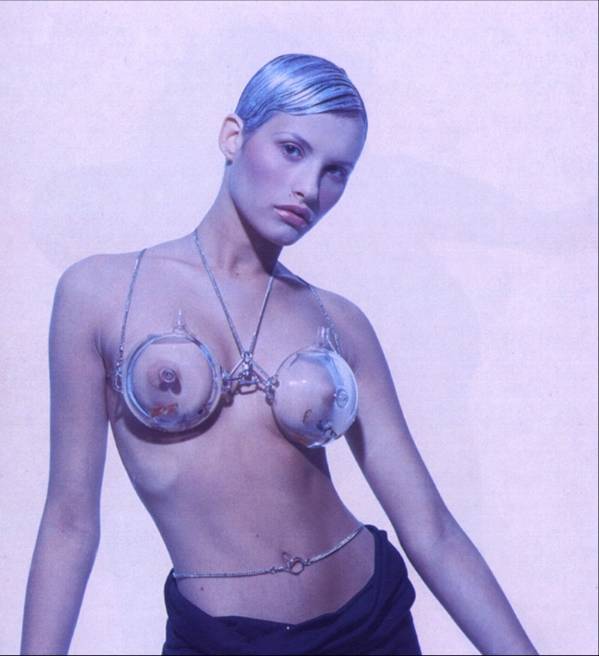
In a short presentation you can explore a brief history of photography, Agency “Magnum”, Fashion photography, “High-fashion model look”, Erotic photography, Photography as a part of installation. Photography  (photographs taken from the catalogue, and some of them by artist’s courtesy)

A  food company annual report that has to be cooked first.

Croatian creative agency Bruketa & Zinić have designed an annual report for food company Podravka that has to be baked in an oven before it can be read.

Called Well Done, the report features blank pages printed with thermo-reactive ink that, after being wrapped in foil and cooked for 25 minutes, reveal text and images.

To be able to cook like Podravka you need to be a precise cook. That is why the small Podravka booklet is printed in invisible, thermo-reactive ink. To be able to reveal Podravka’s secrets you need to cover the small booklet in aluminium foil and bake it at 100 degrees Celsius for 25 minutes.

This is the seventh annual report for Podravka designed by Bruketa & Zinić OM. Those seven books won numerous awards worldwide such as London International Awards (Gold), Art Directors Club New York (Silver), Red Dot (Best of the Best), Cresta (Winner of Category), I.D. Annual Design Review (Best of Category), Type Directors Club (Typographic Excellence), Graphis (Gold) , Creativity (Gold) , Good Design (Graphics Award), HOW International Design Awards (Best of Show), Moscow International Advertising Festival (Gold), International Forum Communication Design (Design Award) and ARC Awards (Gold).

Bruketa & Zinić OM is a 60-people independent agency based in Zagreb, Croatia. It was established 10 years ago. The agency has been awarded for their projects by many prestigious contests and their work has been presented in many publications, books and exhibitions worldwide.

MV

Source:

http://archimedespool.wordpress.com/2007/12/10/well-done/

http://www.dezeen.com/2008/07/27/dezeens-top-ten-stories-with-most-comments/#more-15733

At the Zagreb film festival (17th-23rd October, 2010) You can see the Juanita Wilson`s film “As if I am not there”  (Tuškanac cinema, Saturday, October 23rd at 21.00 ) made in coproduction of Ireland, Macedonia and Sweden, based on Croatian journalist and writer Slavenka Drakulic´’s book of the same name.

Synopsis
As If I Am Not There is a story of a young woman from Sarajevo whose life is shattered the day a young soldier walks into her apartment and tells her to pack her things. Rounded up with the other women from the village and imprisoned in a warehouse in a remote region of Bosnia, she quickly learns the rules of camp life.The day she is picked out to ‘entertain’ the soldiers, the real nightmare begins. Stripped of everything she ever had and facing the constant threat of death, she struggles against all the hatred she sees around her. In a final act of courage or madness, she decides to make one last stand: to dare to be herself. And this simple act saves her life. It’s when she realises that surviving means more than staying alive that she has to make a decision that will change her life forever. As If I Am Not There is a modern war story that explores love, identity and the connections based on Croatian journalist and writer Slavenka Drakulic´’s book of the same name.

Awards
Sarajevo Film Festival, Toronto International Film Festival

MV

Source:
http://zagrebfilmfestival.com

The 25 FPS will take place from 21st to 26th September 2010  in Zagreb, Croatia.

The 6th Festival 25 FPS is organized by Association for Audio-visual Research 25 FPS. The festival is supported by the Office of Culture City of Zagreb, Croatian Audiovisual Centre , Ministry of Culture Republic of Croatia and Student Centre University of Zagreb. Festival takes place at Student’s Centre in Zagreb, Savska 25.

25 fps denotes the number of full video frames per second as used in the European PAL video system, in contrast to film’s 24 or NTSC video system’s 30 frames per second.

You can see this year`s competition program:

http://25fps.hr/2010/pdf10/25_FPS_COMPETITION_2010.pdf

MV

Source:

http://25fps.hr/2010/

The New York Times introduces Japanese artist of white noise music Ryoji Ikeda. “While most artists draw on emotions, experiences and their environment for inspiration, Japanese artist Ryoji Ikeda also uses math, numbers and data for his work. His computer-generated audiovisual concert of sorts is called “Datamatics 2.0,” and is part of the French Institute in New York’s “Crossing The Line Festival,” which features artwork that doesn’t fit neatly into any one genre.”

Co-curator Simon Dove explains: “This really is a combination of a long period of research for Ryoji, in looking at this relationship between data, what is data, what is information, and how do you make that information tangible, visual?” He adds: “Whatever we do generates data, so he’s really composed the sound and data streams in synchronization, creating this immersive concert environment.”

Ikeda also designed an installation in a room with several screens called “The Transcendental,” which was intended to help viewers understand the vast concept of infinity.

“Without knowing that, what you see is what you get and what you actually feel, not just from the ear, not just from the eyes, but soak yourself into the universe or space that you have never imagined,” says Yoko Shioya, the artistic director of the Japan Society.

To show just how complex it all gets, in “Datamatics 2.0,” the data that’s visualized is pulled from places like NASA, the Human Genome Project, and in a fitting twist, even the data that was created through the making of this project is also visualized in that project.

“Ryoji Ikeda: The Transcendental” is on display at the French Institute Alliance Française Gallery at 22 East 60th Street through October 16. You can listen to samples at http://www.youtube.com/watch?v=GOZRzjZ5Q-g&feature=related  and http://www.youtube.com/watch?v=omDK2Cm2mwo

MV

Source:

http://www.ny1.com/

http://www.fiaf.org/crossingtheline/2010/2010-09-ctl-ikeda-transcendental.shtml

On November 30th and December 1st, many of the most innovative people and organizations in the science and technology world came together in New York city for an historic gathering – the 2010 World Technology Summit & Awards — to celebrate each other’s accomplishments, to explore what is imminent, possible, and important in and around emerging technologies, and to create the kinds of serendipitous relationships that shape the future.

The Award winners and finalists are those individuals (in 20 categories) and companies/organizations (in 10 categories) who are — in the opinion of the WTN Fellows and Founding Members, through the Awards voting process — doing the innovative work of “the greatest likely long-term significance” in their fields. They are those creating the 21st century. In category ARTS the FINALISTS were:  Carsten Nicolai,  Jesse Gilbert, Mark Amerika and Ryoji Ikeda, and the WINNER was Tod Machover (http://www.todmachover.com/)

Called “America’s Most Wired Composer” by The Los Angeles Times, Machover is widely recognized as one of the most significant and innovative composers of his generation, and is also celebrated for inventing new technologies for music, including Hyperinstruments which he launched at the MIT Media Lab in 1986. Machover’s music has been acclaimed for breaking traditional artistic and cultural boundaries, offering a unique and innovative synthesis of acoustic and electronic sound, of symphony orchestras and interactive computers, and of operatic arias and rock songs.

MV

Source:

http://www.wtn.net/2010winners.html

http://mitworld.mit.edu/speaker/view/1209

Fascinating floating pavilion is an idea of Leo Modrčin and as masterpiece of group of architects is going to introduce Croatia on 12th International Architecture Exhibition in Venice on 29th August to 21st November 2010.

The floating boat, actually a barge, and his special “house” made of 35 tons of iron pieces in 885 thousand welded joints, has sailed in a harbour of Rijeka, on his way to Venice, already causing a huge interest of tourists.

This masterpiece is a work of art of 15 Croatian architects: Tonči Žarnić, Veljko Oluić, Saša Begović, Marko Dabrović, Tanja Grozdanić, Silvijo Novak (3LHD), Igor Franić, Petar Mišković, Helena Paver Njirić, Lee Pelivan and Tomo Plejić (Studio UP), Goran Rako, Saša Randić and Idis Turato (Randić-Turato), and Pero Vuković.

It corresponds basically with Japanese selector Kazuyo Sejima`s concept: “People meet in architecture”. As one of the authors, Goran Rako says: “It`s the result of huge synergy flown in a particular product”, and he adds that although they are still not aware of all that is going on, it`s obviously incredibly exciting! The space is emotionaly affected, but functionaly not dominant at all.

“When architect makes a house, it`s excellent; when he makes a floating house, it`s a masterpiece; but when that house goes to Venice – it`s a dream of dreams!” – says a satisfied arcitect Idis Turato.

MV

Source:

http://www.tportal.hr/kultura/kulturmiks/82847/Brod-kuca-uplovio-u-rijecku-luku.html

http://www.labiennale.org/en/Home.html

http://gizmodo.com/5622474/this-is-how-you-physically-construct-a-mirage

http://www.vecernji.hr/kultura/strucnjaci-za-krah-paviljona-nisu-krivi-valovi-nego-avanturizam-clanak-185907

It collapsed!

Croatian Floating Pavilion designed for this year’s Venice Biennale by the group of architects and professors (Sasa Begovic, Marko Dabrovic, Igor Franic, Tanja Grozdanic, Petar Miskovic, Leo Modrcin, Silvije Novak, Veljko Oluic, Helena Paver Njiric, Lea Pelivan, Toma Plejic, Goran Rako, Sasa Randic, Idis Turato, Pero Vukovic, Tonci Zarnic), who used the huge amount of Croatian taxpayers’ money to build it, was never exhibited there because it has collapsed on its way. In spite of the fact that inrepairable damage was caused by the structural failure nobody took responsibility for the blamage.

Bana Solar for Media-via

Images courtesy Katarina Olujić

THE ONE TAKE FILM FESTIVAL (18/11-20/11) IS AN INTERNATIONAL FESTIVAL OF FILMS SHOT IN ONE TAKE, THAT IS FILMS SHOT WITHOUT INTERRUPTION, FROM THE MOMENT OF TURNING THE CAMERA ON TO THE MOMENT OF TURNING THE CAMERA OFF. THE ONE TAKE FILM FESTIVAL ELIMINATES A SEEMINGLY INDISPENSABLE PART OF A FILM – NAMELY, EDITING – AND THUS PROHIBITS CUT, DISSOLVE, FADE IN/OUT AND ALL OTHER TYPES OF TRANSITIONS. THE ONE TAKE FILM FESTIVAL IS THE ONLY ONE OF ITS KIND IN THE WORLD, AND IT TAKES PLACE IN ZAGREB.

THE ONE TAKE FILM FESTIVAL INCLUDES FILMS OF ALMOST EVERY GENRE IN IT’S PROGRAMME (DOCUMENTARY, FICTION, EXPERIMENTAL, MUSIC VIDEO AND COMMERCIAL). THE ONE TAKE FILM FESTIVAL, IN IT’S THREE-DAY PROGRAMME, CONVINCED YOU IN THE POSSIBILITY OF EXCLUDING THE CLASSIC CONCEPT OF FILM EDITING IN FAVOUR OF CAPTURING A PART OF REALITY IN ITS CONTINUITY, WHERE THE DIVERSITY OF CINEMATIC LUDISM IS NEVERENDING, AND THE RESTRICTION INCREDIBLY ENTICING.

Participants and programme:

http://www.onetakefilmfestival.com/2010_en/index_flash.html

Source:

http://www.onetakefilmfestival.com

The Croatian Museum of Contemporary Art (Muzej suvremene umjetnosti-MSU) was founded in 1954 with the aim of following, documenting and promoting events, styles and phenomena in contemporary art. After the old museum, which was located in the Upper Town, new museum was opened in 2009 between capital`s historical centre and its new districts across the Sava river.

This slideshow requires JavaScript.

The collections of the museum include some twelve thousand contemporary artworks, created by Croatian and international artists between 1950 and the present day. the museum includes the following collections: Drawings, Prints, Posters, and works on Paper; Film and Video; Photography; Media art; Sculpture and Painting.

The core of newly founded collection of Media Art is constituted by early computer artworks that the MSU collected during the five international exhibitions entitled New Tendencies, which took place in the period from 1961-1973. The third exhibition of New Tendencies (1965) investigated the relationship between cybernetics and art, while the fourth (1968/69) was dedicated to information theory. In accordance with that, an international symposium on Computers and Visual Research took place in the same year, accompanied by the publication of the first issue of BIT international.

Virtual contemporary gallery

MV

Source:

http://www.msu.hr/#/en/

http://www.msu.hr/#/en/19/


Famous Croatian Art Historian and director Branko Franceschi will introduce his Virtual Museum of Avantgarde Art with a special approach to avantgarde movements in previous Yugoslavia, during Biennale in Turkish Sinop, between August 14th-September 4th, 2010.  The third edition of Sinopale is “Hidden Memories, Lost Traces”. The project aims to gather a “transportable memory” of the city in order to reveal hidden memories and lost traces thus stimulating memories of the artists as well.

The Biennale organizer stresses: „ The actualization of this crucial period by means of arts will bring back memories and link with the present maybe unexpected singular events, thus allowing new readings of the process of change in European cities and actual events that take place in those cities. (…)

Sinop has the characteristic of an isolated port city which has existed throughout ages.  It has a loaded history and a loaded memory. The existence of a penitentiary (prison) where some of the prominent intellectuals of that period had to do time and its impacts is part of the collective memory of the city (…) Black Sea region is a transit area between the geographical Europe and the political Europe where historical conflicts still take place.

Sinopale 3 will deal with the artistic, creative works related to the expression of the “hidden memory” together with contrasts such as the “choice of the inhabitants” and the “choice of the governors” in integrity on “city, district, individual” basis. Through workshops, exhibitions, performances where “proposals for the future” will be discussed (…), the Biennale will be held in a “participative-interactive” way.

MV

Sources:

http://www.culturenet.hr

http://www.sinopale.org/

The Solar Decathlon Europe is an international competition open to all accredited colleges, universities, and other post-secondary educational institutions, which has taken place in Madrid, Spain during June.

The Solar Decathlon is also a public event designed to increase awareness about energy for residential use. The competition demonstrates that a beautifully and well-designed house can generate enough electricity to meet the needs of a household, including electricity for lighting, cooking, washing clothes and dishes, powering home and home-office electronics, maintaining a comfortable indoor temperature and air quality. The Solar Decathlon shows Europe and the world, those clean and plentiful sources of energy—solar energy—can provide the power for healthy places in which to live, work, and enjoy. One of the famous researche centres is IaaC (The Institute for Advanced Architecture of Catalonia). It has carried out research projects in Brazil, Taiwan, Croatia and Romania. In 2008 it was chosen to take part in the official section of the Venice Biennale with the project Hyperhabitat, and in 2010 it presents a 1:1 scale house entirely produced at the Institute at the Solar Decathlon Europe in Madrid, and got the 1st people choice award.  Prince Felipe said it looked like a boat but the spectacular house was also called “peanut house” “cinnamon submarine,” “forest zeppelin” or “whale belly” .

However the house has also introduced significant technological innovations such as the world’s most efficient flexible solar panels, made with both Spanish and American technology. So far the house has already attracted the interest of the public and the media. The house has been put up for sale from € 45,000.

Source:

http://www.fablabhouse.com/en/

http://www.sdeurope.org/

Film Mutations: the Festival of Invisible Cinema is a Croatian filmological project on the modes of film presentation and interpretation, or the politics of film curatorship, Gorgona, 1.- 5.12.2010.

This year’s festival-symposium will take place from 1 to 5 December, 2010, at the MUSEUM OF CONTEMPORARY ART, with programs and lectures by world film scholars, Alexander Horwath (director, Austrian Film Museum), Olaf Möller (permanent curator, Film Festival in Oberhausen), Nicole Brenez (professor, University Paris III) and Go Hirasawa (lecturer, Tokyo University Meiji-Gakuin) and filmmakers Lech Kowalski and Klaus Wyborny, who will start a debate and reflexion on the modes of non-commercial exhibition and on the ethics, aesthetics and politics of poor, minority curatorship.

In previous years, amid discussions of the digital, of the death and mutations of analog film, of the expectations for the archival and museum destiny of film on celluloid tape, a challenge with which film museums and archives will confront the digital age, of the utopian role of museums in relation to the image market, there was a call for a redefinition of the notion of film curatorship.

MV

Source:

http://www.msu.hr/#/en/18934/