(Presentation at Harvard University: MA. Srnic – New Media Genres ) The first-year students of The Faculty of Culturology in Osijek (Croatia, Europe) had to make experiments with glasses, light and liquid as a topic named “Creative Glasses” while attending “New Media Genres” board, lectured by M.A. Vesna Srnic, Art Historian and professor of Comparative Literature. Students have inventively made photographs of glasses as the abstractions, using only their cell phones! The aim of this project, realized at the seminary, was to encourage students to explore and reinvent the Reality with a new approach to seeing.
At today’s NGO Culture, media and education – ARTHEA election assembly, Dr. Vesna Srnić was re-elected as a president, and a lawyer Mislav Mitrović was elected as a vice president for the first time. Committee members were: Tomislav Lačić, UNISB assistant and Ivo Baričević, musician.
Summer Eternal Anthology new contributors are now known! They are all great humanists. Project authors are Dora Klindžić, NGO ARTHEA’s member and her boyfriend Argo Tuulik, BAFTA winner for RPG Disco Elysium screenplay.
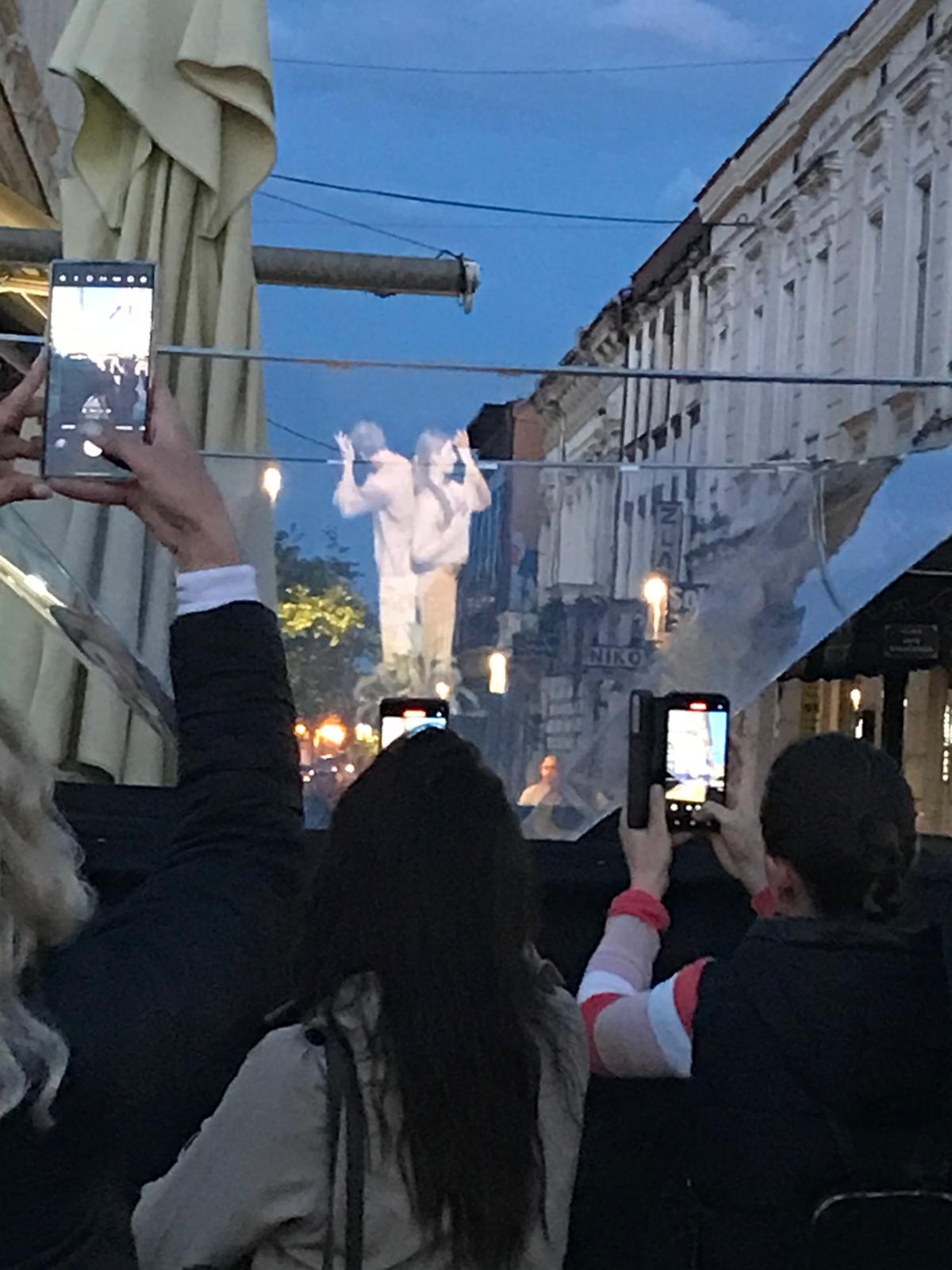
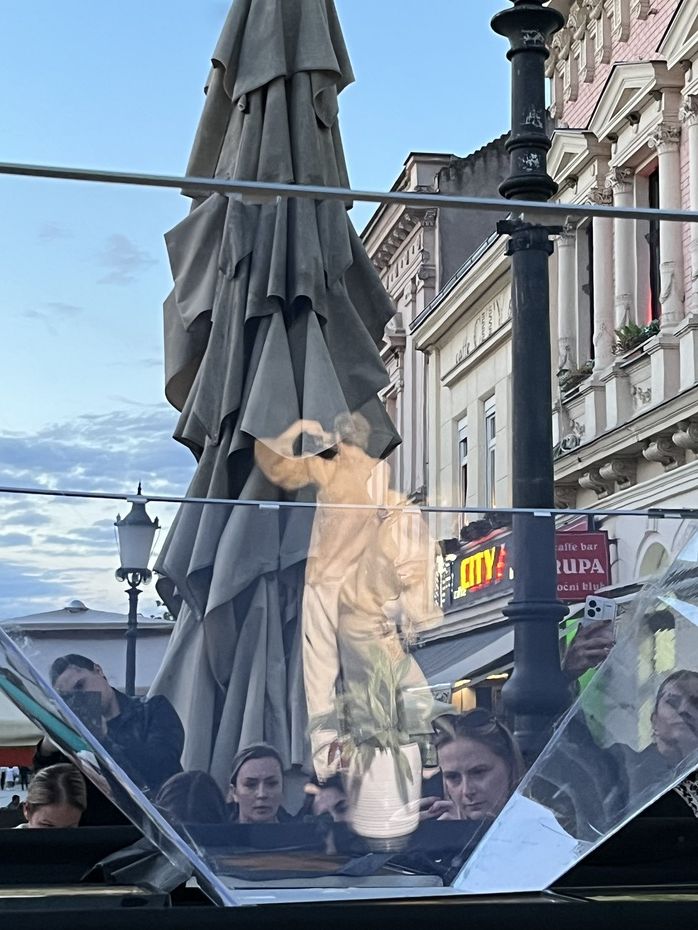
A performance Hologram, plants and students: ADU & ARTHEA & UNISB was performed by our NGO Culture, media and education – ARTHEA, at the 23 rd Festival of the firsts and seconds, during the second day. The second day of festival was organized by the author Ana Janjatović Zorica, on November 4.11.2025. in Zagreb, at the Cultural Information Center/ KIC.The author of performance is PhD. Vesna Srnić, Media culture course docent, and ARTHEA’s president.
Video: Tomislav Lačić
The author of the performance is docent Dr. Vesna Srnić, lecturer of the Media Culture course at UniSB and president of the NGO ARTHEA, and participants are: Verica Šalata, student of UniSB (eco percussion), Kasijan Kristić, student of the Technical High School Slavonski Brod (guitar), Ivo Baričević, ARTHEA member (Rav Vast), Marin Živković, guest from Zagreb (saxophone), Nikola Curić, guest from Zagreb (hang drum) and Tomislav Lačić, assistant at UniSB, technical support. ADU students Viktor Konstantinović and Matilda Hrastić formed a hologram with contemporary dance, choreographed by Nastasja Štefanić Kralj, with technical support of Hrvoje Ćosić from the NGO Connect IT.
The art organization Studio Artless is organizing a presentation of innovative, critical and participatory art works and projects related to the theme of this year’s 23rd Festival of the Firsts: Short Circuit – Technology and Visions of the Future (3.11 – 7.11.2025.) Part of the Festival will be held at KNAP, and the performance of our civil organization Culture, Media and Education – ARTHEA has been selected for performance at the Gallery on the Floor, Cultural Information Center, in the very center of Zagreb (Preradovićeva Street. No. 5).
The author of the performance is docent Dr. Vesna Srnić, lecturer of the Media Culture course at UniSB and president of the NGO ARTHEA, and participants are: Verica Šalata, student of UniSB (eco percussion), Kasijan Kristić, student of the Technical High School Slavonski Brod (guitar), Ivo Baričević, ARTHEA member (Rav Vast), Marin Živković, guest from Zagreb (saxophone), Nikola Curić, guest from Zagreb (hang drum) and Tomislav Lačić, assistant at UniSB, technical support. ADU students Viktor Konstantinović and Matilda Hrastić formed a hologram with contemporary dance, choreographed by Nastasja Štefanić Kralj, with technical support of Hrvoje Ćosić from the NGO Connect IT.
NGO ARTHEA member Dora Klindžić, her boyfriend Argo Tuulik (famous as ZA/UM and Disco Elysium screenwriters and for Argo’s BAFTA award), and the project team are introducing Summer Ethernal Anthology.
This incendiary tome is part cultural journal, part development diary, part exclusive game reveal.
The University of Slavonski Brod, UniSB, as the youngest university in the Republic of Croatia, celebrated its fifth anniversary on University Day, 5th Dies Academicus, on Thursday, September 25, 2025. The program began at 11:00 a.m. with the opening of the newly renovated premises in Building 10 of the University of Slavonski Brod (Ulica 108. brigade ZNG 36, Slavonski Brod). The central event, a ceremonial joint session of the Senate of the University of Slavonski Brod, the University Council and the Economic Council of the University of Slavonski Brod, was held at 12:00 p.m. in the Multifunctional Hall (Building 9). The agenda included: a ceremonial program with speeches, a report on the work of the University, the promotion of doctors of science and university specialists, the award ceremony, and an artistic program.
A journalist from England came to Zagreb, Croatia to record an interview with a member of our NGO ARTHEA, Dora Klindžić and her boyfriend Argo Tuulik about the London ZA/UM company and all the past achievements and problems with their work in the UK… Argo is a BAFTA winner for the screenplay of a famous Disco Elysium video game. Maybe the topic is not our usual artistic field, but their fight for employee rights is… The journalist represents People Make Games, and it is exactly what Dora and Argo with Aleksandar Gavrilović are working on for co-ownership of the players in the (RPG) game…
The University of Slavonski Brod, Department of Humanities, has begun cooperation with the NGO Culture, Media and Education – ARTHEA on a new extra-institutional project that will be realized for the Day of the City of Slavonski Brod in 2026, and performed by Zagreb artists/performers. UniSB docent dr. Vesna Srnić, as the ARTHEA’s president, implements the project in the new Syllabus.
Dr Vesna Srnić, president of the NGO Culture, Media and Education – ARTHEA and her longtime colleague and friend Prof Slavenka Vuković Bryan, director of Languages United in Bath, UK, enjoyed a relaxed summer catch-up in the town square in Slavonski Brod.
Cyber Festung conference at the University of Slavonski Brod (11.-13.6.2025.) – UniSB assistant professor dr. sc. Vesna Srnić, president of the civil organization Culture, media and education – ARTHEA presented on 12.6. 2025. the theme Modular, performative multimedia art. The aim was intergenerational (vertical) performative multimedia art as a unified primary, secondary and tertiary education.Modular education was a research method of global and local approach to the philosophy of existence, known as GLOCALIZATION.With multimedia access and distance learning (e-learning), great artistic SITE-SPECIFIC performance was realized through group orchestration in extracurricular activities, in the main city square, and for all this, a resistant and safe digital environment was definitely needed.
The project Hologram for plants and students: ADU & ARTHEA & UNISB (*Academy of Dramatic Art in Zagreb & NGO ARTHEA & University of Slavonski Brod) is presented as a performative event that uses the artistic metalanguage of media art, i.e. digital synesthetic framing with a hologram image, sound and the process of a recorded dance next to a sound-activated plant in the real space of the biosphere.
Back in 2011, the thesis of my doctoral dissertation Electronic media and aesthetics in post-feminist theory was that the aesthetic of media art becomes valuable through the performative, holistic and cybernetic in the domain of the Technosphere.
What is important, the spectacle is not the intention here, because we question whether the artistic event/performance notices us, to paraphrase the painter Paul Klee and media art theorist Žarko Paić (2019) – is there (astonished) biofeedback?
Žižek (2024) in his book Christian Atheism writes about Athings or Non-things as a new materialism of objects without aura, which do not have a discrete language of objects, that they are the real that escapes symbolic and quotes Han: The NON-THING impresses because it does not inform. It is the reverse, mysterious backyard, the ‘subtle beyond’ of the artwork, even its unconscious. It resists the disenchantment of art.
In this sense, our performative project transcends the banality of the spectacle of the Technosphere in a way that, through biofeedback from the audience, scientists, students and artists, and especially the plants, it is self-regulated through the loop of the (cybernetic) system, granting deep spiritual peace and a moment of tranquillity in which, as philosopher Marijan Cipra (1999) would say, Sisyphus’s rolling stone stops.
The lucid David Bowie, an English rock singer, also spoke about the unconscious levels of assimilation and humanization of technology through experimentation in inner worlds, in a famous interview (1999) with an interesting statement on technology (the Internet): … it is an alien lifeform – a technology that is both exciting and terrifying, we would say an area of existential and spiritual transformations that are intensifying.
With this infinite loop of the present, we twist the past and the future, referring to Badiou, and through the performative event of authentic humanity, we contribute to the union in a higher organic unity – that of science and art through love, or to apply the moral code of Cipra (1999) from his Christocentric period to collision with the technology of transhumanism, in which he directs people to the revelation of the dialectical principle of the Apostle Paul in the New Testament: (…) we have been freed from the Law and serve in the newness of the Spirit, and not in the oldness of the letters.
Dr. Vesna Srnic has just published a new scientific book Electronic Media and Aesthetics in the Postfeminist Theory. The book is sponsored by the Ministry of Science, Education and Youth in The Republic of Croatia.
There are works in the field of media theory, especially electronic ones, as well as in the field of postfeminism, but not in this juxtaposition. The scientific book is written in an appropriately clear and concise manner and presents the material in an accessible manner. The methodology is appropriate to the requirements of social sciences and humanities at the contemporary stage of development. The work takes into account relevant publications in the broader field of the topic. From the review by prof. emerita Nadežda Čačinovič
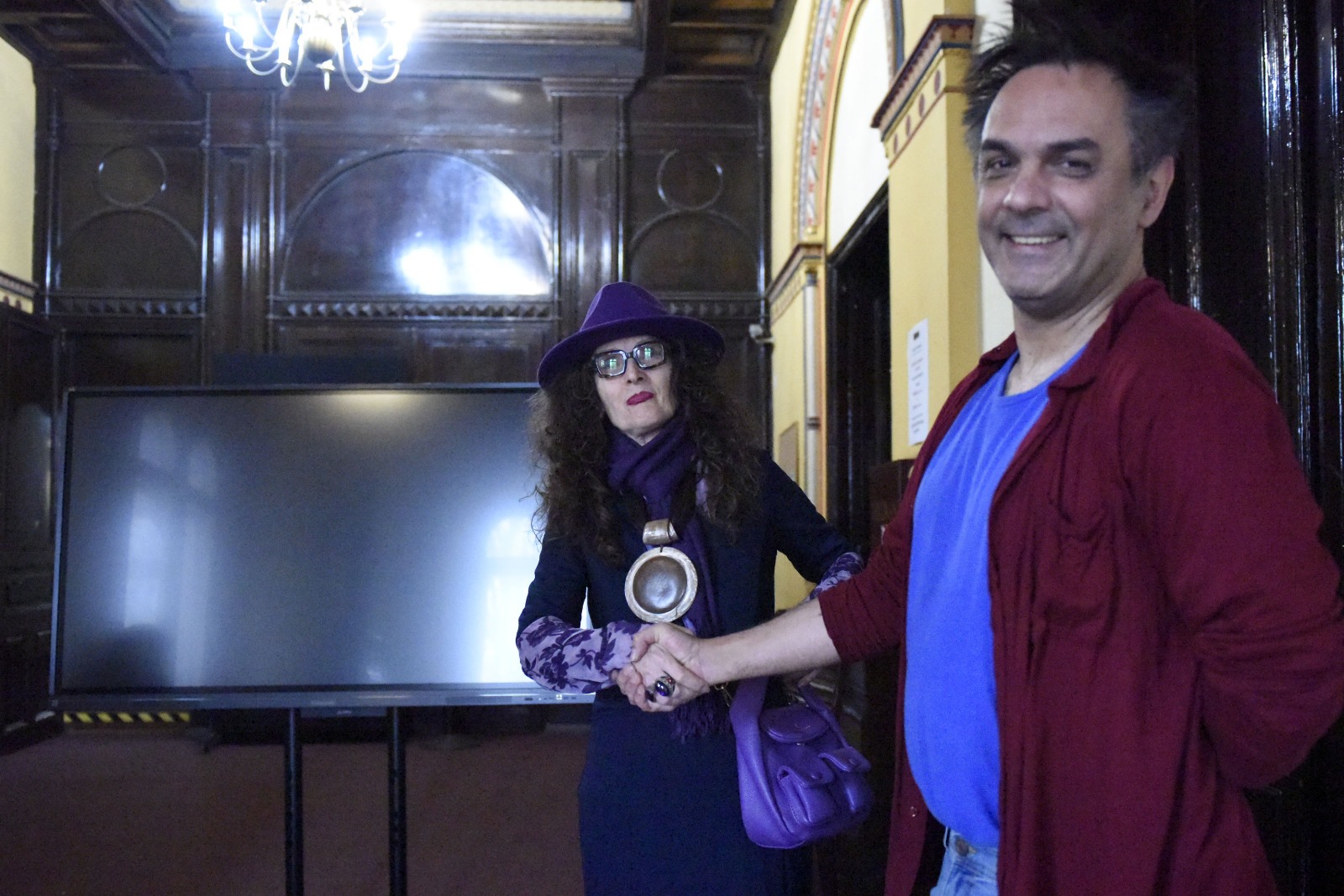
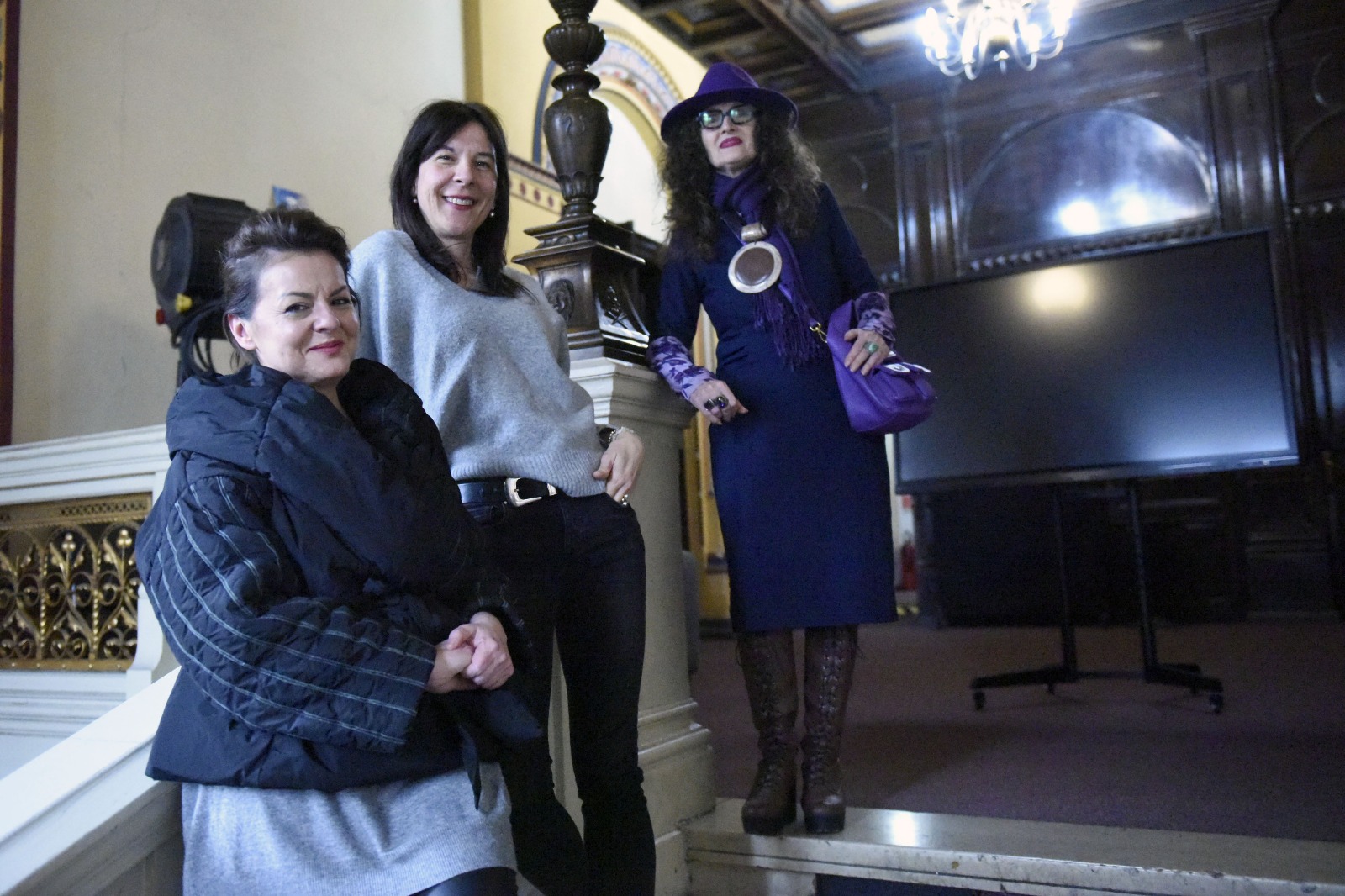
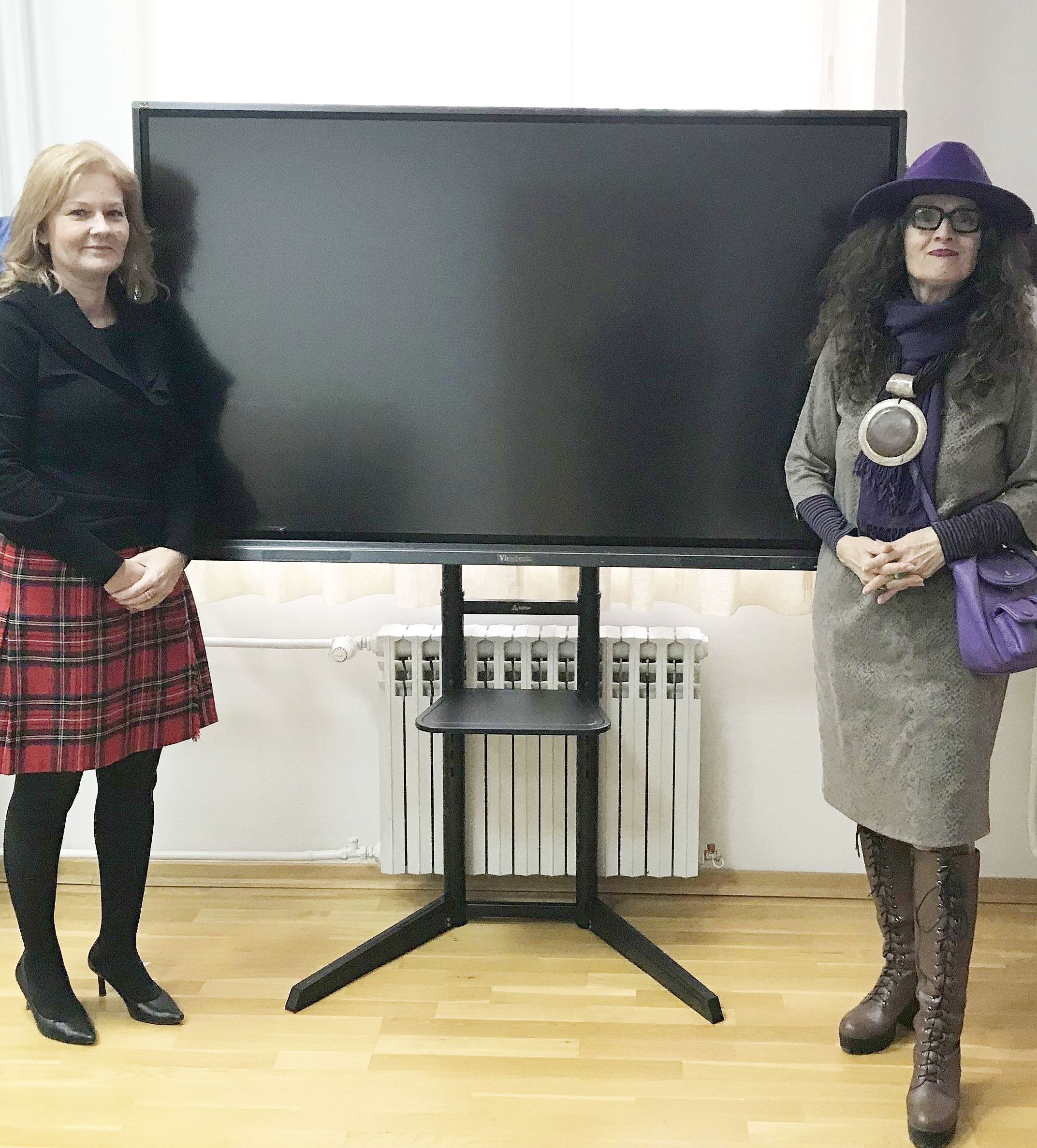
Assistant professor of art Saša Božić, vice-dean for international and inter-institutional cooperation at the Academy of Dramatic Arts at the University of Zagreb, receives a donation (an interactive monitor) related to the collaborative project from the president of the organization Culture, Media and Education – ARTHEA, dr. Vesna Srnić, assistant professor at the University of Slavonski Brod, which is also a partner institution in the new performative project.
The donation presentation ceremony was attended by MA. Zrinka Šamija, head of the Service for International and Inter-institutional Cooperation, full. prof. MA. Ivana Buljan Legati, vice-dean for teaching and students of theater studies at the ADU, and the president of the organization ARTHEA, dr. Vesna Srnić, assistant professor at UniSB.
The new performative project of the civil organization Culture, Media and Education – ARTHEA began with a donation to the Department of Social Sciences and Humanities of the University of Slavonski Brod: for the needs of the project and teaching, Assoc. Prof. Dr. Vesna Srnić, President of ARTHEA, delivered a 65″ interactive monitor Viewsonic (1.450 euros) to the Head of the Department of Teacher Education, Assoc. Prof. Dr. Katarina Šarčević Ivić-Hofman. The project by the author Dr. Srnić, is being implemented in collaboration with the Academy of Dramatic Arts in Zagreb. The project sponsors are the Ministry of Culture and Media of the Republic of Croatia and The City Government of Slavonski Brod.
Ivana Brlić Mažuranić City Square in Slavonski Brod
Meaningful coincidence is the basis of the synchronicity and wonder of artistic creation, about which the old books, especially the texts of the Vedas, have written since ancient times. We carefully and intentionally synchronized the Biodata devices with the natural sound impulses of the Tree of Life plant and joined them with the intuitively orchestrated sounds of the Ensemble composed of pupils of the Slavonski Brod Music School, the Trade-Technical School, as well as the University of Slavonski Brod students on accompanying eco percussion. As the part of the project, students made their own recycled percussion instruments from plastic bottles and pebbles with sand, encouraging environmental artistic awareness.
ALL THOSE SOUND CONTRIBUTIONS OF THE STUDENTS AND PUPILS HAPPENED AROUND THE SUNNY PLANT. In this sense, BASIC ART WAS ESTABLISHED IN THE VISUAL AND AUDITORY MEDIA THROUGH EXTENDED PERCEPTION, WHEN LINGUISTIC NARRATIVES SILENCED, SO SILENCED THE MUMBLING OF THE WORLD, or as the French philosopher Alain Badiou would say: ITS IDENTITIES, NARRATIVES, NATIONS, RELIGIONS AND THE FINALITIES OF DEATH WERE SILENCED. (Badiou, A., Immanence of truth, being and event III, 2018)
Still freely interpreting Badiou, in the authentic creativity of the performance, with the egalitarian principle (equality), we introduced into the participants “quiet enthusiasm” or ontological affects, in the sense in which “previously unthinkable sets are coaxed into existence”. (ibid. p. 18)
Aleatory and the indeterminacy of the knitwork are these strange loops of deep love, art, science and authentic politics, in a situation that was performed in the heart of the city, on Ivane Brlić Mažuranić Square, exactly at noon on May 18, 2024. So, once again, Badiou emphasizes the importance of the guiding principles of the Event: “For now, let it suffice to say: Glory to the complete indices, those flints that produce an absolute spark.” (ibid. p. 460)
As every year, we see a special educational importance in glocalization (glocal₌global+local) and decentralization of culture, in the penetration of a progressive, intensive project into an urban space where pronounced conservatism in the understanding of culture and rigid xenophobia prevail, i.e. frustration not only with foreigners, but also contemporary artistic practices as a different, abstract expression, and therefore we incorporate this educational project into curricula at the primary, secondary and tertiary educational levels.
The project was implemented in the category of Improving the quality of life of children and young people, with the special task of Education about healthy lifestyles, nature conservation and sustainable development. We are witnessing ubiquitous and extreme digitalization, which in itself does not have to carry a danger for the psychophysical development of young people, if it is carried out in a healthy way, as the author of this text sees in her scientific works: through the “anthropologization of technology” or in other words through the production of prolonged perception (astonishment), it is mastered affectively by the “extended hand” of man – technology (tool) while digitally framing the humane artistic content.
In this sense, the new performative project called Performativity of Synchronous Chance: INDETERMINATE ART put in the foreground exactly this characteristic of technology – serving humanity, and not the other way around. Through the digital recording of the impulses of a large plant, we put nature at the foundation of authentic art, while our ensemble of musicians, pupils and students on eco-percussion creatively adapted to the beauty of these plant, its organic impulses, celebrating the unity of nature and human inventions, while also raising awareness of scientific and artistic useful, healthy module of lifelong education and holistic living.
Ph.D. Vesna Srnić, docent
NGO ARTHEA president
The Croatian national television HRT informed about our performative project.
PUBLICATION (In the Croatian language)
Multicultural project „The Image of the World“
NGO „Culture, Media and Education“ – ARTHEA
Our project is a multiplatform awareness raising programme with a heavy emphasis on performance art in urban surroundings.
Through this project we hope to:
Combat xenophobia (fear of everything strange/strangers)
Contribute to the decentralisation of culture and spread cultural events outside of major institutions via civil organisation.
Increase the presence of performance arts in urban environments.
With the imminent entrance of Croatia in to the EU the need for a project that raises awareness of European values is greater than ever.The project puts a heavy emphasis on bringing european values to its’ future citizens on a more intimate and local level. More often than not it’s the localities that are neglected since most programmes deem it only necessary to target major cities.
The project will immidiately pull in by-standers and will peak their curiosity which will lead them to ask questions about the performances and in turn will be informed about the project and it’s theme. By catching just a glimpse of another/different culture they can draw their own conclusions as to the differences and similiarities they may share with other nations. It will promote open mindedness and a will to accept foreigners in to their society. Web logs, social networking and traditional forms of media will ensure that the program will not go unnoticed. With all the performers, intelectuals, experts and the general public involved the project has huge potential to reach a massive audience.
This project takes advantage of this and uses the fact to „hook“ by standers. From then they ask themselves the questions needed to come to the realisation that multiculturality and understanding is indeed the road that needs to be taken. This unique combination of performances in urban surroundings combined with online conferences, discussions and multimedia campaign (brochures, social networking) will ensure that the project will reach it’s full potential.
The members of ARTHEA are scientists, professors, artists, students and agile creative citizens. The association is registered as a competent civil organisation for the Cultural areas of Art, Media and Internet, thus it promotes Media culture and raises awareness on the Multicultural integration. Professor Frankopan Mariano Klaric, (ex) Public Relations
PUBLICATION
publikacija_2024_arthea_final-1 (In the Croatian language)
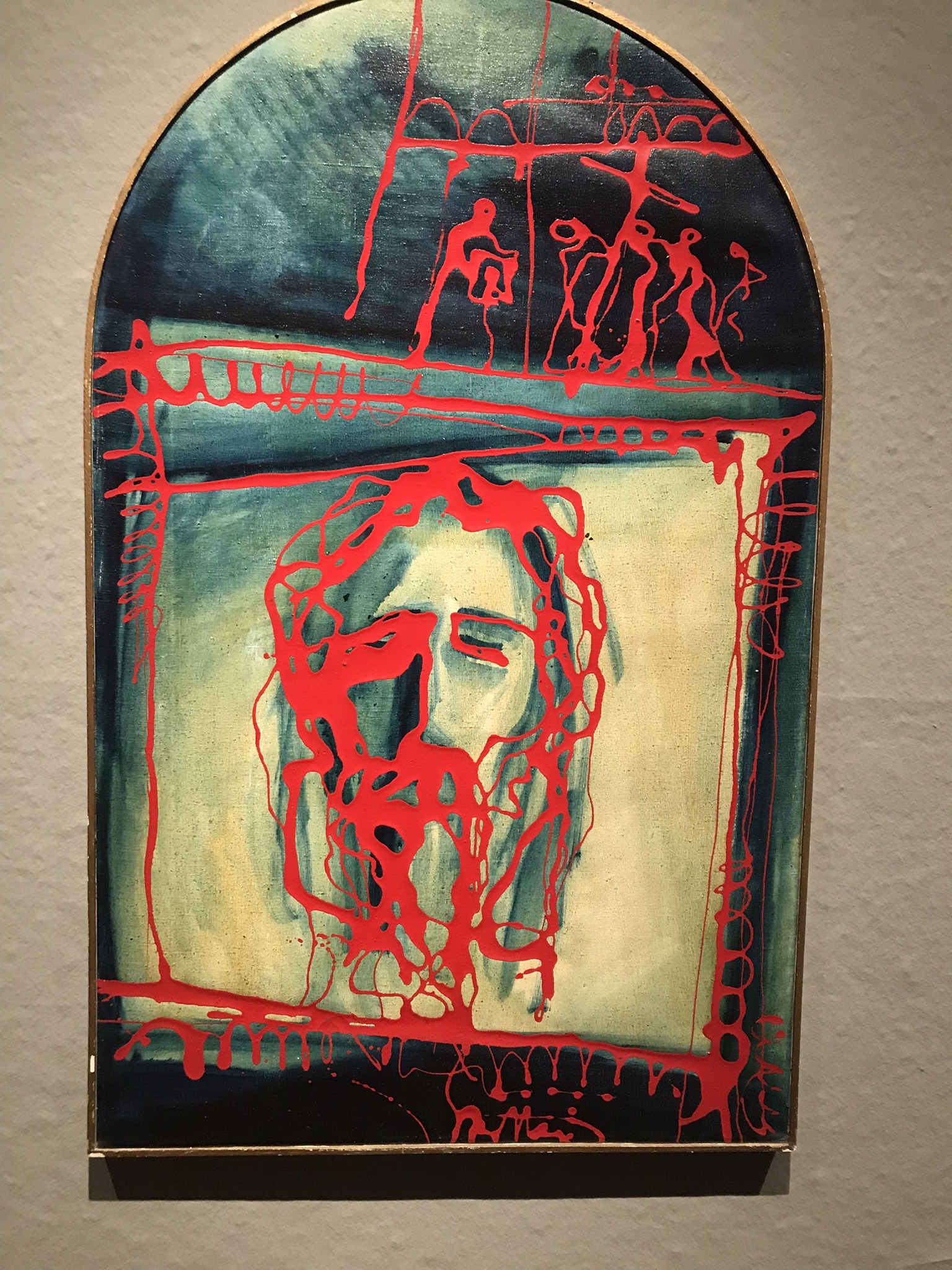
The recent exhibition of the Dalmatian painter Botteri Dini in Zagreb Klovićevi dvori (till 6.2.2024.) matches the quality of new controversial book by the world-famous Slovenian philosopher Slavoj Žižek, known in the West as “the most dangerous atheist and leftist”.But we think that Žižek’s preoccupation with Badiou’s concept of “the event” did not solve the process nor performativity in art.
“More than 100 public works by Josip Botteri Dini can be seen all over Croatia and the world, such as the stained-glass windows in the Church of the Holy Cross in Siget in Zagreb or the monumental frieze History of Split in Hotel Zagreb in Split. Monumental stained-glass windows and mosaics adorn the Church of St Leopold Bogdan Mandić in Melbourne, Australia, as do the stained glass, mosaic, and paintings in the Church of Christ the King in Porto D’Ascoli, Italy.
Contemplating the spirit of the times, he created a unique oeuvre within contemporary art, especially in the field of religious art, with recognizable and distinctive artistic interpretations of biblical content. It is precisely in this area that Josip Botteri Dini has a prominent place within domestic and international art.” (Josip Botteri Dini – A retrospective, Klovićevi dvori, Zagreb)
A unique insight of a theological project Christian Atheism, as a new book of worldly famous Slovenian philosopher Slavoj Žižek, brings us the exploration of his religious thinking: “This affirmation of Christian theology whilst simultaneously deconstructing it is familiar Žižekian move, but one that holds deep-seated political, philosophical and, in the end, personal import for him”. Boštjan Nedoh adds: (…) “Žižek makes it clear why Christian atheism is the main concept of every true materialism”. (Bloomsbury Academic)
But we think that Žižek’s preoccupation with Badiou’s concept of “the event” did not solve the process nor performativity in art.
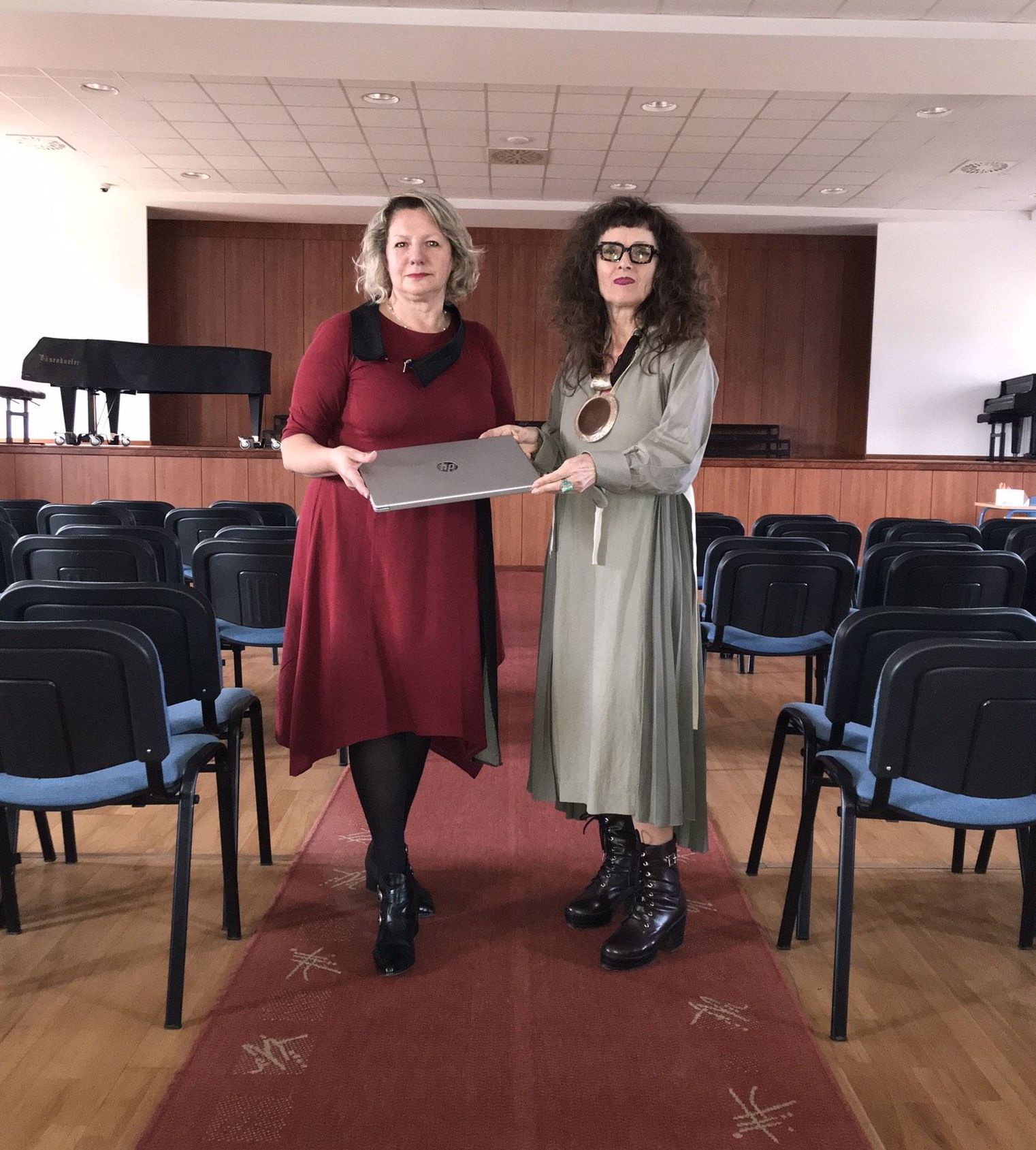
The non-governmental organization Culture, Media and Education – ARTHEA has started a new performative project by donating a laptop to the Music School in Slavonski Brod. The president of ARTHEA Ph.D Vesna Srnic, who is also the author of the forthcoming project, has handed the laptop to the headmistress, professor Mirela Jagodić.
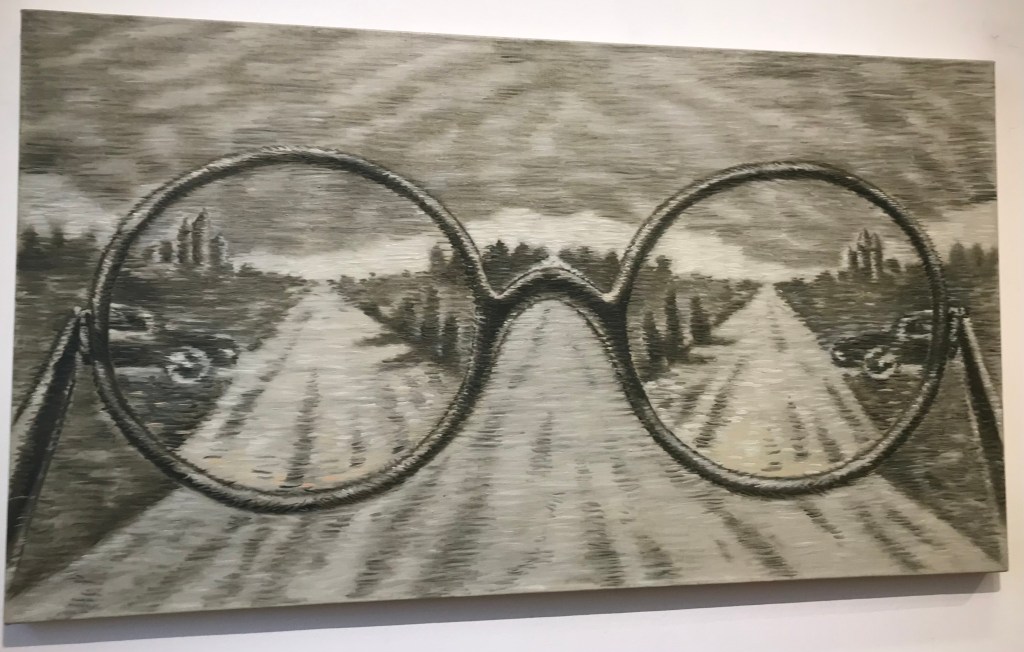
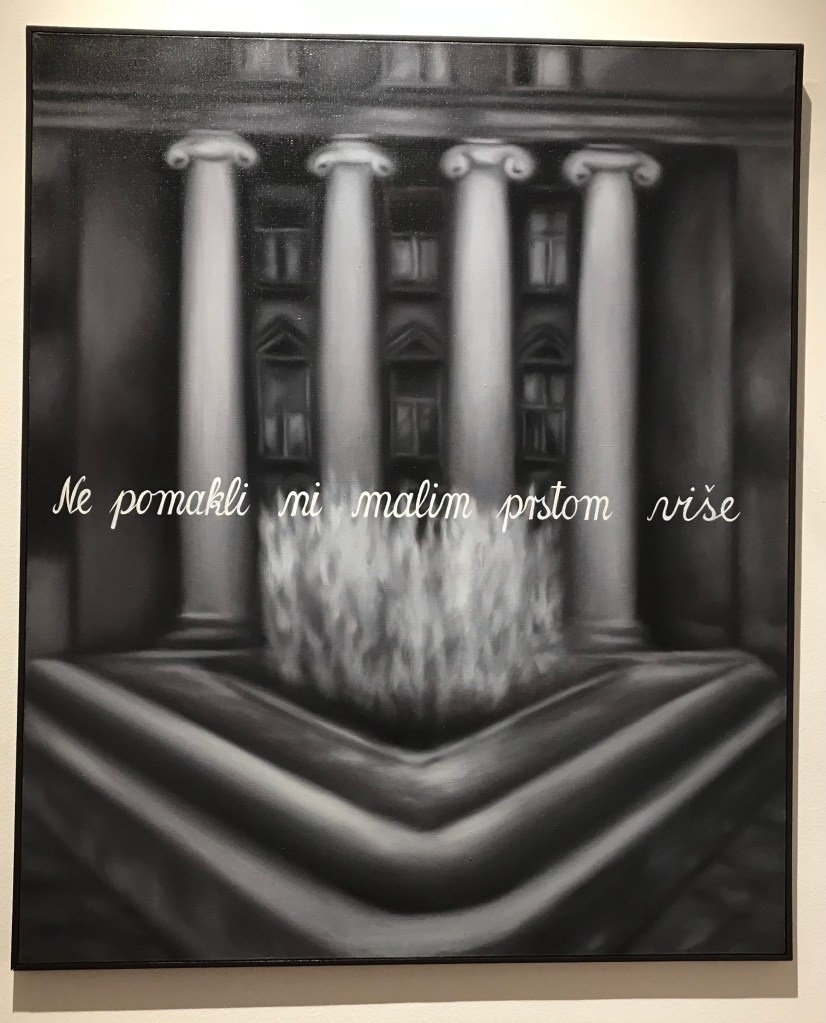
Media-via president PhD Vesna Srnic visited the Museum of Contemporary Art in Zagreb and saw the exhibition of the avant-garde video art artist Sanja Iveković, with whom she once made an interview for the Croatian magazine Svijet. Sanja is a fighter for women’s rights, for anti-fascism and in this sense she is known for her sculpture the Pregnant Memory (Lady Rosa of Luxembourg) installed in prestigious world museums (MOMA, New York, Luxembourg)…
Sanja Ivekovic and dr Srnic have known each other since 1980. while as a student of art history dr Srnic worked in the Gallery of the City of Zagreb (today MSU) in Gornji grad. And Media-Via president is pleasantly surprised when she sees herself in the photo of a document of one of Sanja’s dramatic works.
Croatian Cantus Ensemble has been developing successful artistic collaborations with several related ensembles in Europe and the world for years. On Monday, October 9, 2023 they were joined by the flute ensemble Kölner Gesellschaft Für Neue Music – KGNM. In the preface of the program we read about the witty combination of tones of the German ensemble and Cantus at HDS (Croatian Society of Composers): “Ka-Ge-eN-eM + Ce-A-Ha-De-eS = NEW MUSIC!” is the winning formula of the first concert of the new season under the conductorship of the artistic director of the Cantus Ensemble, Berislav Šipuš”.
The following compositions were performed:
KGNM: Magdalena Buchwald – Syrinx II KGNM: Igor C. Silva – We Live in a Bubble Cantus Ensemble: Zlatko Tanodi – Cyborg KGNM: Georg Heike – Stimmungen
KGNM: Anne La Berge – Conduits Cantus Ensemble and KGNM: David Batinić – Echoes of alienation (first performance) Cantus Ensemble and KGNM: John Hawkins – Divisibility
The announcement of new music is always exciting, because it opens up a field of synchronicity with the present moment. In the company of lucid art theoretician and excellent music connoisseur Dr. Kruno Martinac, we problematized the relationship between the “old” and the “new”. Dr. Martinac stated the point of view that old music in every performance is always new music at a given moment. The interesting point of view in which the old is intertwined with the new and actually apostrophizes tradition as a process, I personally considered insufficiently distinguishable: what, in my opinion, appears as new in New music has its own syntax that is not only manifested in the way of performance or synchronizing the old with a new moment, but contemporaneity and synchronicity are already given in the composition, in the manner of indeterminacy and aleatorics. Tonight’s concert still brought some overtones of the already mentioned “matrix of new music”, I would say like Cage (Water walk in We Live in a Bubble) or as Dr. Martinac felt it like Stockhausen (Stimung, although the vocal performance in Stimmungen “was like singing into an instrument”)… Tonight’s new music types are all written compositions that mostly control “the chance”, but the musicians experimentally exposed themselves to the audience’s proximity and feedback during the all-sensing, interactive performance of Heike’s just-mentioned composition Stimmungen – entering the audience. Digitization of sound is part of the imaginative performance of We Live in a Bubble, and the humane perception of technology was contributed by Cantus’ performance of the Zlatko Tanodi composition – Kiborg.
NGO Culture, Media and Education – ARTHEA president Dr. Vesna Srnić is honored with an agreed collaboration with the Cantus Ensemble on the spring performance in 2024.
Culture, media and education – ARTHEA and I personally, as the president and author of the project, strive to introduce a new artistic practice into intergenerational education and influence the progressiveness of the agency system and culture in a local and global sense.
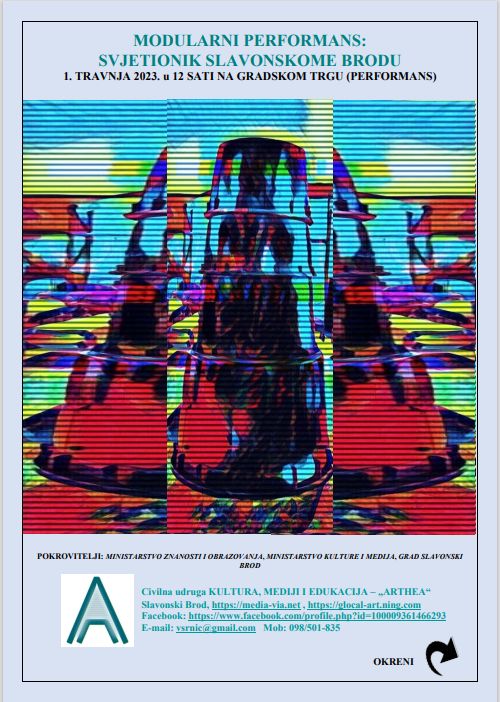
It is difficult to express in words about such a complex and demanding visual and sound performance! That is exactly why it is titled as “Modular Performance: The Lighthouse of Slavonska Brod”. It is about the simultaneous orchestration of a performative action, multimedia tasks for students and an online scientific symposium with professors and doctors from Croatia and abroad! The performance consisted of a visual part (creating the lighthouse) and a sound part (generated plant sounds).The project was supported by two ministries: the Ministry of Science and Education and the Ministry of Culture and Media of the Republic of Croatia and the City of Slavonski Brod.
The Civil organisation Culture, Media and Education – ARTHEA is preparing sounds for performance art – Modular Performance: Lighthouse of Slavonski Brod (Croatia).
1.4.2023. / 12:05 – 12:20 p.m., on the town square / Live streaming at https://www.facebook.com/profile.php?id=100009361466293 Scientific/artistic performance on intergenerational education, online scientific symposium with multimedia seminar for the UNISB students.
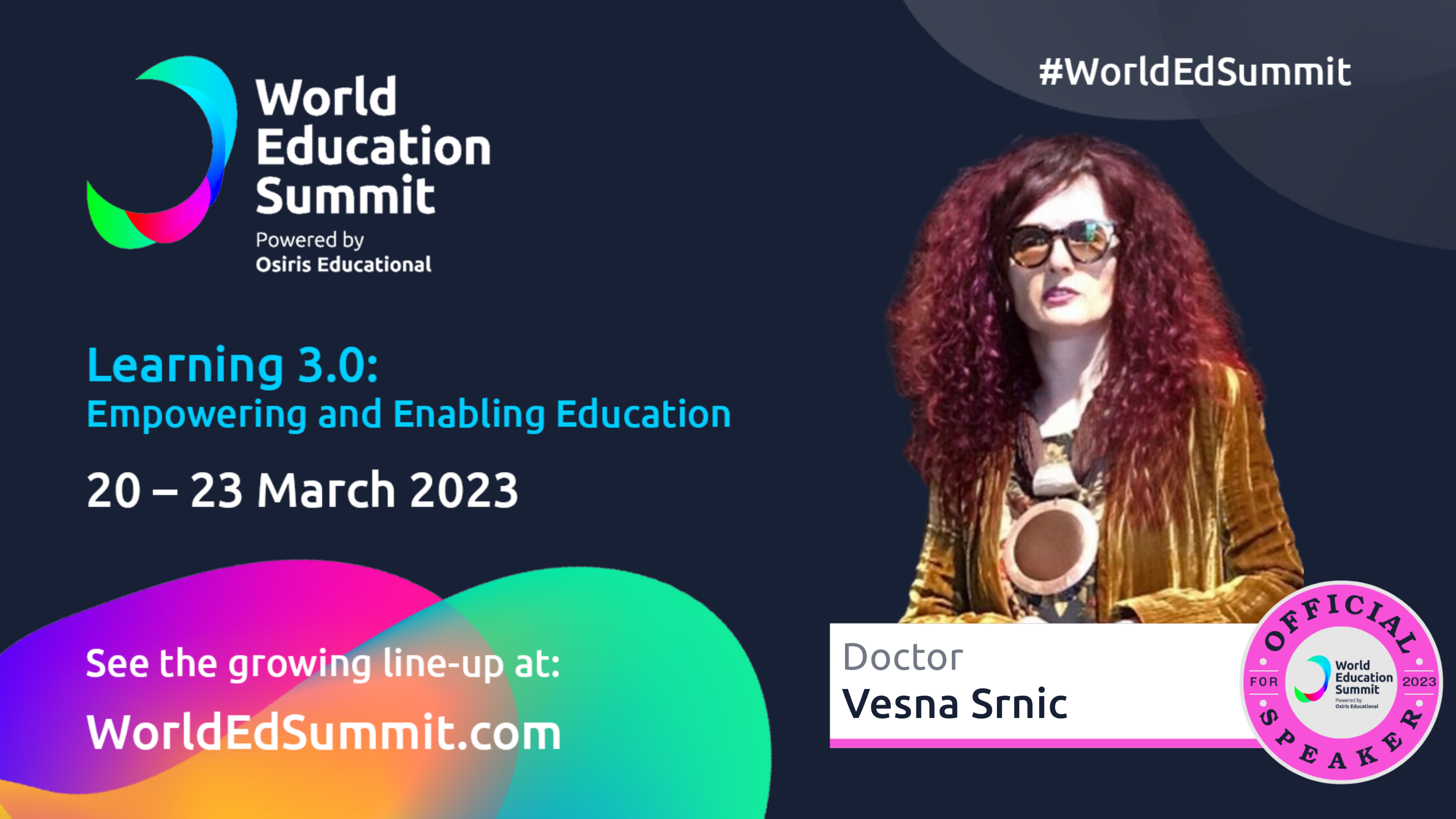
Dr Srnic was an official speaker at the World Education Summit 2023 in the United Kingdom, from 20 to 23 March 2023. The WES website address is https://www.worldedsummit.com/ and the section is Educators-Platform/Research Bites. Dr. Srnic spoke about her scientific and artistic works in the video presentation Modular Performative Education as Science.
Dr Srnic is invited to be an official speaker at the World Education Summit 2023 in the United Kingdom, in March. You can find her speaker profile on the WES website here: https://www.worldedsummit.com/speakers/dr-vesna-srnic/, as well as announcement and session graphics. She will speak onher scientific and artistic works inModular Performative Education as Science presentation.
Writing lucidly, visualizing enigmatically, Kipke the artist lives a hermetic reality and existential sensibility, but has to avoid quick statements in that singular Image of the World.
Kipke shows the degrees of his belief, moving from a magic trick to an effort to prove authenticity, all through the hard work.
Dr Vesna Srnic, docent
More on the exhibition:
8th December 2022 to 29 January 2023, the National Museum of Modern Art, Zagreb
In front of the Art Pavilion in Zagreb, the artist Kata Mijatovic set up a small black house without doors and windows, slightly larger than a dog’s house. But the house hums, generating a mechanical threatening sound of some machine…
Without the ancient good, beautiful and true, without the human dominance over technology, only the power for dominance and fear of other people produces a black threat of dead Art…
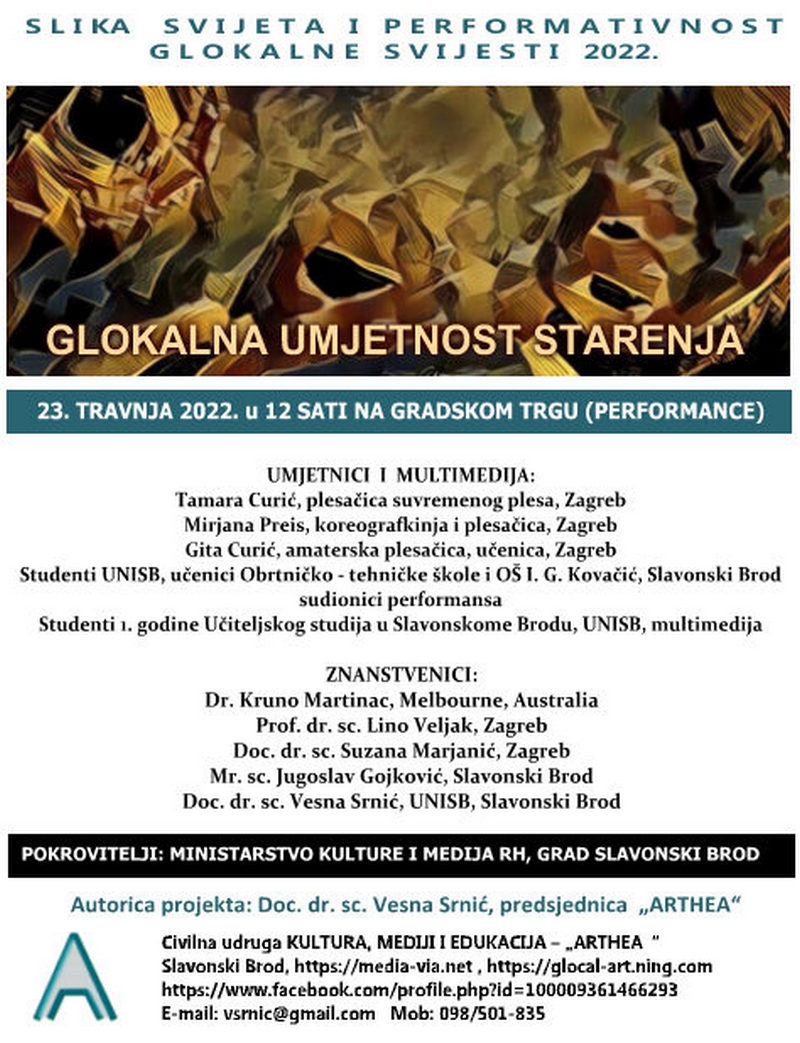
New performance Glocal Art of Aging is a strong performative symbol and a unique field of knowledge – the image of the meeting of young and old is an INDICATION OF THE PROBLEM in Western culture that needs to be addressed on many levels: philosophical, social, cultural and artistic, religious…
Situationally and performatively through the “site-specific” artistic action (city square Ivana Brlić Mažuranić in Slavonski Brod / noon), we will multiply the simultaneous symbolic overlap of intense symbolic encounter of young and old: through the dance experience of three dancers, students (Elementary School I. G. Kovačić and Crafts -technical school) and 80 students on a multimedia assignment (Teacher Training, UNISB) will meet with 5 senior users of the Home for the Elderly and the Infirm. Along with minimalist, contemporary music, three dancers from Zagreb of different generations will perform dance meditation on the Square: retired choreographer and dancer Mirjana Preis, middle-aged dancer Tamara Curić and young student Gita Curić.
All students will be aware of the importance of their existential role “moving to meet the elderly”, university students will be mentors who will guide old people a few meters across the square to meet the young, and young people will give them flowers and cakes… During the meeting three interactive generations of dancers will encourage dancing as “the revolution of tenderness” (Papa, I wish you a smile). Writing about the importance of meeting and listening to “young prophets and old dreamers”, the Pope stressed the need for the reality of wise rooting with the synergy of young, playful enthusiasts with experienced elders who want to make their wealth available to the mutual benefit of growth.
A large number of students will actively participate in the performance by recording multimedia tasks as final works in the course Media Culture (UNISB). In a scientific review of this phenomenon of dialogic actualization of young and old, eminent scientists with glocal addresses will write: Dr Kruno Martinac from Melbourne, Australia, Professor Ph.D Lino Veljak and Assistant Professor Suzana Marjanić from Zagreb, then psychiatry specialist MA Jugoslav Gojković and Assitant Professor Ph.D Vesna Srnić from Slavonski Brod who is also the author of the project.
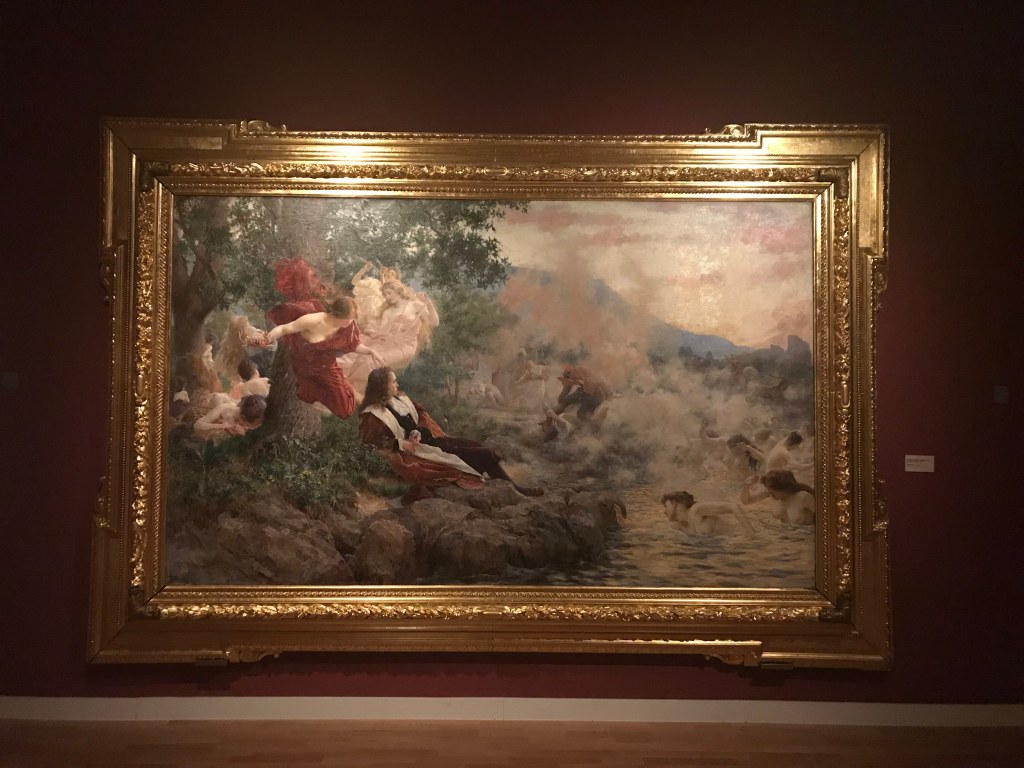
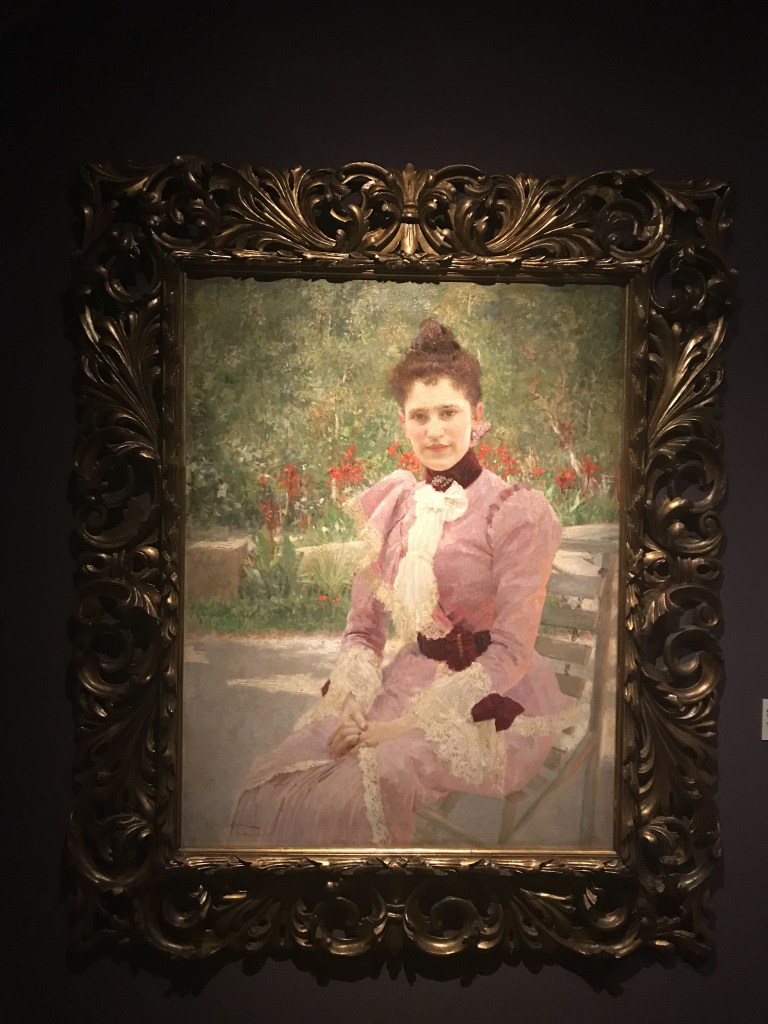
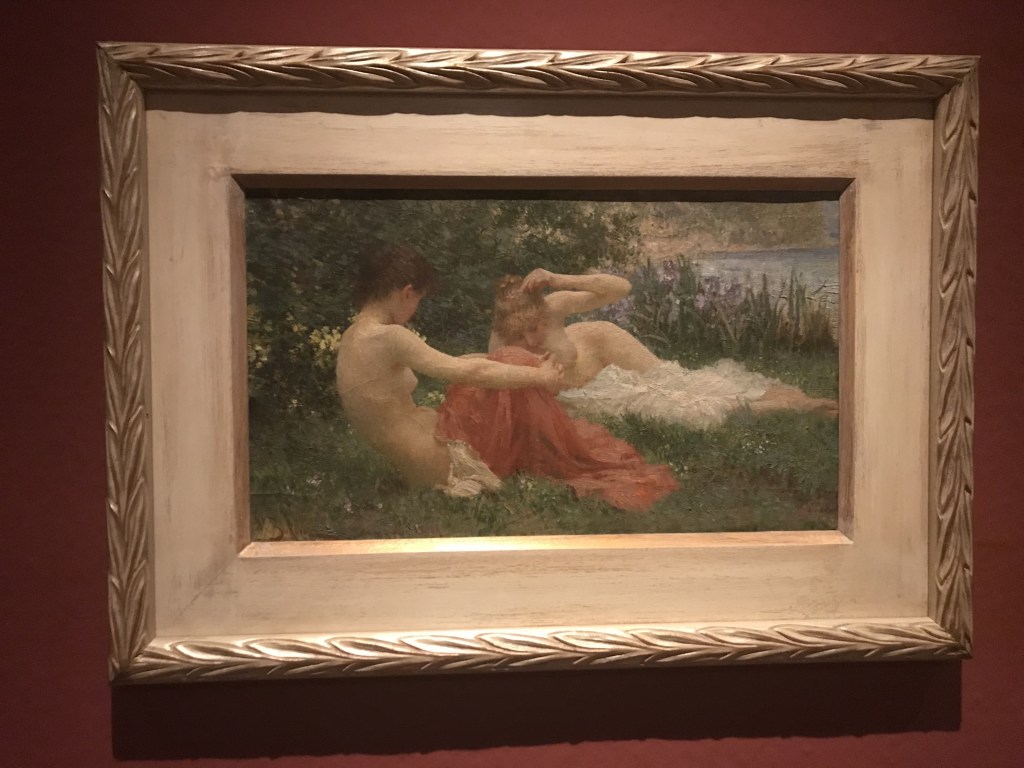
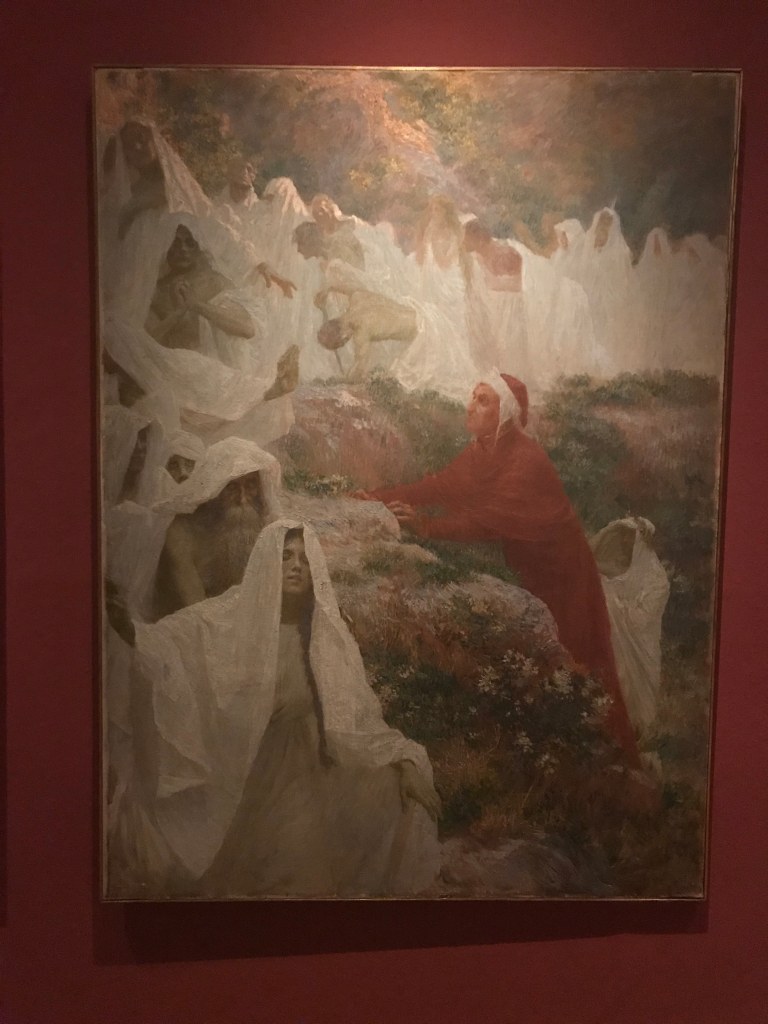
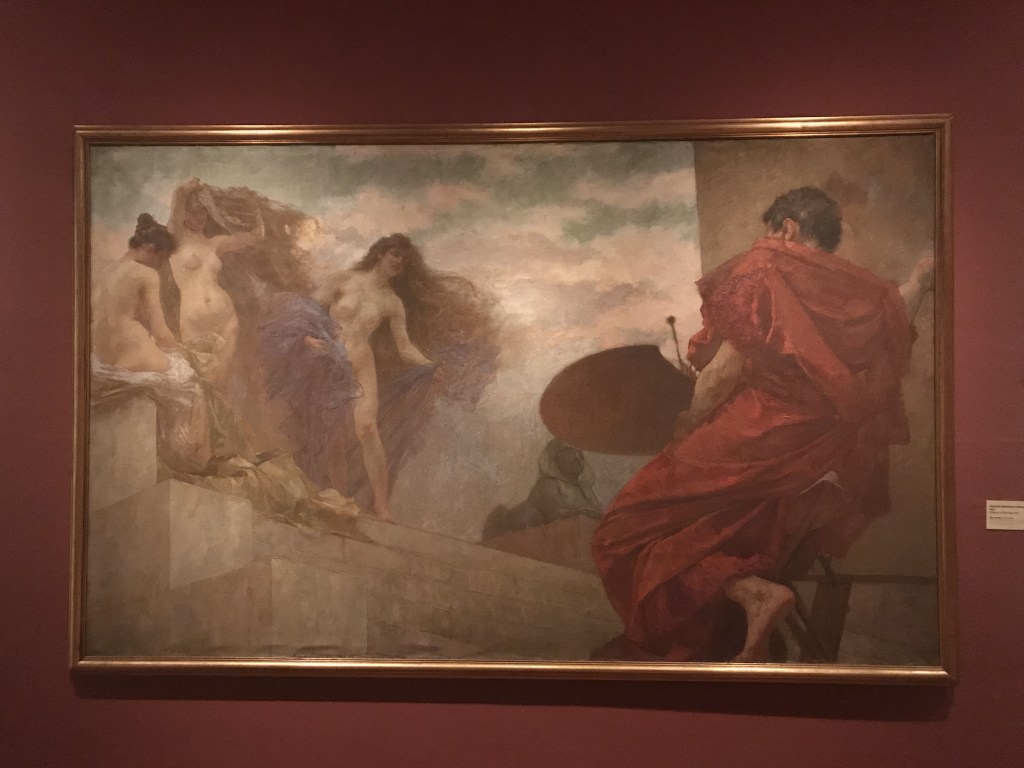
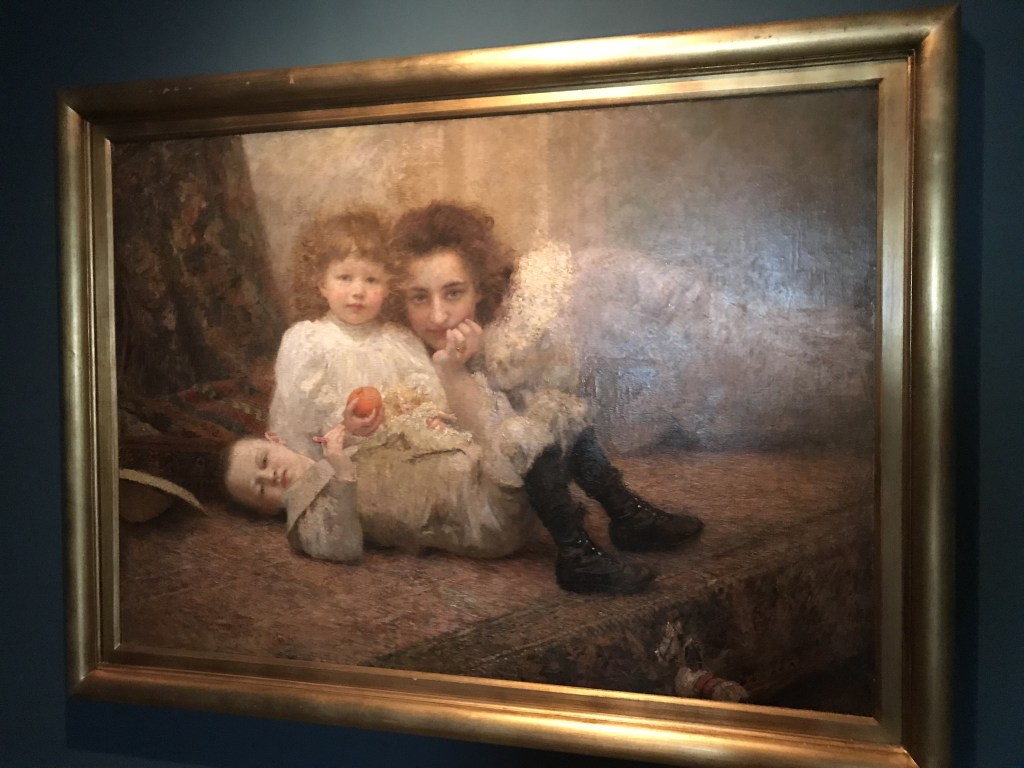
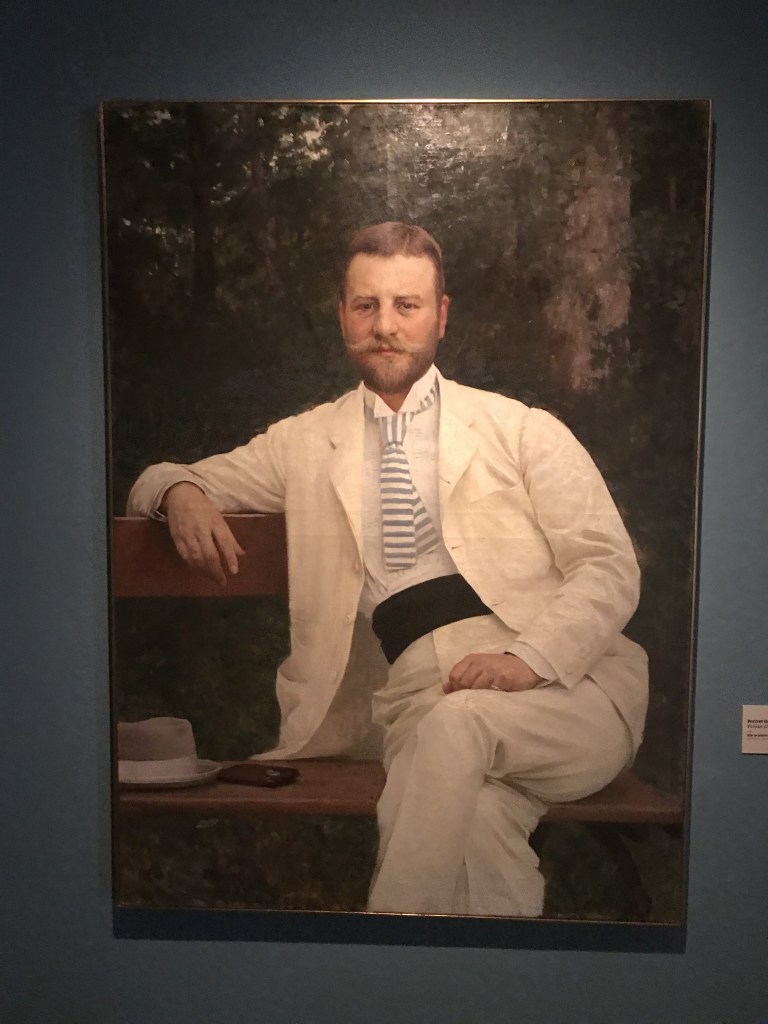
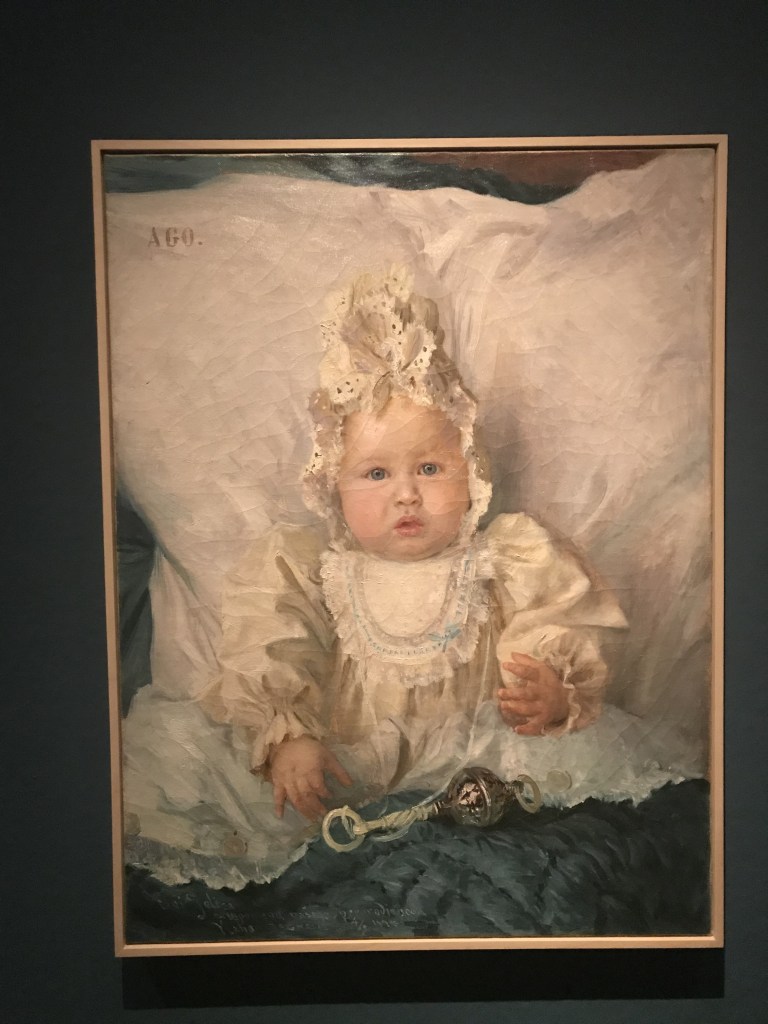
A second exhibition in “the Vlaho Bukovac in Europe exhibition series” in the Klovićevi dvori Gallery is opened from February 17th to May 22nd, 2022, in a year in which we commemorate the 100th anniversary of Bukovac’s death. The theme of this long-anticipated second exhibition is Bukovac’s life and the development of his Zagreb oeuvre, when he became the central figure of public cultural life, a great mentor to a young generation of artists, and when his seductive colorism influenced a whole generation of Zagreb painters, named the Zagreb School.
The first exhibition, Vlaho Bukovac in Paris, 1878 – 1892, held in 2018, dealt with his amateur work in North America, his schooling and professional maturation in Paris, short work stays in England, as well as fruitful breaks in Croatia, until his final return home.

 The first-year students of The Faculty of Culturology in Osijek (Croatia,
 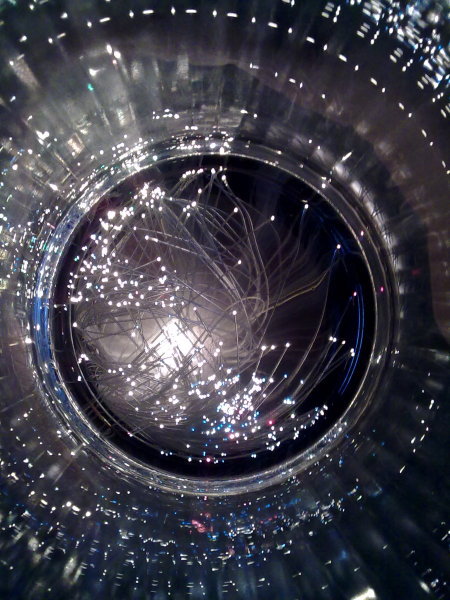 Europe) had to make experiments with glasses, light and liqu
 id as a topic named “Creative Glasses” while attending “New Me
 dia Genres” board, lectured by M.A. Vesna Srnic, Art Historian and professor of Comparative Literature. Students have inventively made photographs of glasses as the abstractions, using only their cell phones! The aim of this project, realized at the seminary, was to encourage students to explore and reinvent the Reality with a new approach to seeing.



























 Media-Via
