Category: World


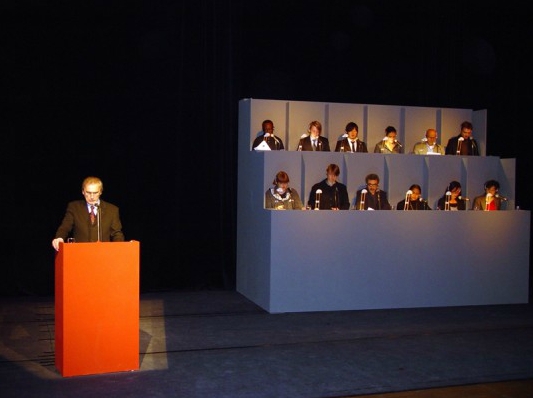
Museum of Contemporary Art in Zagreb, in collaboration with Association Kazimir in Split and the Institute of Network Cultures in Amsterdam, is organizing an international conference of theorists, artists and experts for new media, especially for online video, under the title Video Vortex, which is set to take place on May 17-19 in Zagreb.

This platform deals with a recent phenomenon that has a considerable presence on the Internet (Vimeo, YouTube, Facebook).

Moving pictures (film/video) and internet are in the process of defining their dynamic and creative mutual relations, and therefore the conference will focus on the content of changes in contemporary art and film, but also in wider cultural, social and technological fields.

The initiator of the Network is a prominent new media theorist Geert Lovink from the Institute of Network Cultures in Amsterdam; previous conferences were held in Brussels, Amsterdam, Ankara, Split, and other cities. The Zagreb Conference is an important turning point, because for the first time the conference is supported by a big museum institution such as MSU. After the Zagreb Conference, the following ones will take place in Berlin, New York, and Paris. About thirty speakers will participate in the proceedings of the conference, divided in six panels: Contemporary Art and online video, Theoretical discourses on the contemporary shift in the digital moving image, Social network and online video in the region, The perspective of online cinema, Artists talk about their own work and research in online video, and Technological aspects and new developments of online video.

Participants of the Conference:
Seumas Coutts, Annelies Termeer, Sabina Salamon, Laurence Rickelts, Bojana Romić, Riczhard Kluszchinsky, Andreas Treske, Dagan Coen, Janos Sugar, Peter Perg, Damir Nikšić, Sandra Sterle, Gabriel Menotti, Jan Simons, Nina Koll, Miklos Peternak, Dalibor Martinis, Natalie Bookchin, Annie Abrahams, Maartin Brinkerink, Miha Colner, Richard Vickers.

The exhibition:
Concurrently with the Conference an exhibition will be held, with works that were created through the participative processes in internet networks, i.e. as authorial videos prepared for online distribution: Liu Wei, Perry Bard, Flag metamorphosis, Janos Sugar, Sandra Sterle, Natalie Bookschin, Dalibor Martinis, Damir Nikšić, Annie Abrahams. Curator: Tihomir Milovac. Curators for online video selection: Vera Tollman, Sarah Kesenne, Christiane Paul, Perry Bard, Brian Willems, Hebert Patrick & Alexandra Juhasz.


Source:
culturenet

msu

ikonica_media_art_MVThe famous American MIT Media Lab introduces disputable new topic about social networking sites and stresses that “there is always the danger of a “group think” mentality–when people follow a group consensus rather than critically evaluate information; make decisions without guidance from the social network; or follow “gurus” who provide them with bad information.” We think that the “wisdom of the crowd” is leftist and rightist illusion and doubtful concerning the masses, because only the true Artists/Individuals can conceptually, practically and critically evaluate information. Which means the Art of Living is clever using of both hands and the whole mind and thus a privilege just of Media Art. (More at: https://media-via.net/wp-content/uploads )

It is very weak possibility that the “Part of the answer may come from recent work of Media Lab researcher Dr. Yaniv Altshuler, an expert in collective intelligence methods, who is working with Toshiba Professor Alex ‘Sandy’ Pentland in the Media Lab’s Human Dynamics research group. Altshuler has developed a tool for social financial trading that helps guide users to make better decisions by improving the information flow within the networks. This is accomplished by diverting the traders’ attention away from certain links, and drawing their attention to others, changing the dynamics of the network.”

MV

media.mit.edu

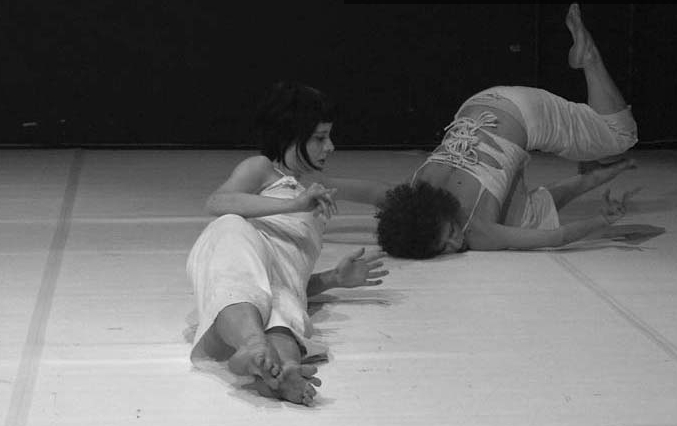
The new work by choreographer Marjana Krajac is the three-hour performance in The Croatian Association of Visual Artists (HDLU) in Zagreb, which will be premiered on 18 October 2014 (Saturday) starting at 14 am with performances of 19, 20, 21 and 22 October also starting at 14 hours.

This simultaneously coVariationsmplex and fragile consideration of the nature of dance, whose building material is just enough present to be irrevocably gone in the next moment, is extensive, yet minimalist dance session between movement, sound and space.

It’s performed by dance artists Lana Hosni, Irena Mikec, Katarina Rilovic, Irena Tomasic and Mia Zalukar. This long dance-work invites us to spend time with it, coming gradually into the layers of its texture. (…)
Transfer through the others and friction on the other, becomes the only area in which dance can construct some type of memory to itself. In this sense, the other is the witness and the participant as well.

”We should stop the stupid idea of having a body and instead consider our bodies as activity, as verbs, as movement and becoming. As long as we “have” and “possess” a body we are alwaysVariations gonna feel violated by language, discourse and the rest of representation”, writes a choreographer Mårten Spångberg, summarizing the utopian relationship of contemporary dance with the body, in yet another manifestation of the eternal struggle of dance with descartian dualism. The tradition of thinking about the body as something which belongs to us, which we own, or rent, something which we temporarily inhabit, is deeply imbedded in all religious dogmas, because the idea of life after life is based on it. However, the idea of ”body as property” isn’t just a religious mental reflex. The paradox of embodiment is most pronounced with disability, often perceived as an experience which separates the body from the self. (…)

But what is important to emphasize is that the choreographic body of Marjana Krajač isn’t a private body, neither does she fight solely for HER OWN body, resistant to social networks and arguing for an absolute control of its idiosyncrasies. The body of Marjana Krajač isn’t focused on the realization of her own (choreographic and dancing) singularity, but on the problematization of something we all care about together.”

More:

http://www.marjanakrajac.com/works

http://sodaberg.hr/

http://www.marjanakrajac.com/

MV

From 27th April — 16th June, 2012  Aanant & Zoo present the first solo exhibition of Croatian artist Vlado Martek (1951) in Germany. The base of Martek’s artistic praxis consists of writing, poetry and language. Since the 1970s Martek has used the different mediums of sketch, collage, happening and books to negate and deconstruct the traditional forms of speech and thus finally returning it to its essence and finding new and different manners of dealing with language. Martek is not a quiet observer. In his works he reacts analytical, critical, ironic and humorous on social structures and constructs, as is evident in the here displayed manifesto Snaga podloge.

Martek, who in the early 1970s studied philosophy and literature in Zagreb, began his artistic career as a poet. Soon he found himself disenchanted with writing as a method of expression. Between 1975 and 1978, Martek presented his poems and other writings to the public on the street as a member of political art collective Group of Six Artists (with Boris Demur, Željko Jerman, Mladen Stilinović, Sven Stilinović , Fedor Vučemilović). The artist manipulates the nature of his material. For example when glass, paper, mirror and a blank surface reveal a “Sonett” (1978/2009) while conserving the poems its inherent rhythm and sound despite the material change. He works as a librarian since 1979.

Source:
culturenet

A Croatian curator of Institute for the Research of the Avant-garde  Zagreb, Branko Franceschi and HDLU in collaboration with David Zwirner, London, present an exhibition of new work by Belgian artist Luc Tuymans. The exhibition, titled Allo!, brings together six new paintings and a series of wall paintings especially conceived for the rotunda of the Mestrovic Pavilion. Painting from pre-existing imagery-photographs, film-stills, newspaper cuttings-Tuymans’s works address the elusive gap between memory and reality, personal space and public space. (10 May – 21 June, 2012)

Tuymans’s new series of paintings is inspired by the final scenes of the 1942 black-and-white film The Moon and Sixpence, which was adapted from the 1919 novel by W. Somerset Maugham. Loosely based upon the life of Paul Gauguin, the movie ends weeks after the death of Strickland, when his doctor travels from London to the village in Tahiti where the main character lived. When the doctor enters the painter’s cabin, the movie changes from black-and-white to Technicolor. Tuymans made a series of screenshots of this color metamorphosis. The photographer’s reflection-that of Tuymans himself-can be seen in the screenshots and therefore also in the paintings.

Born in Mortsel, near Antwerp, Belgium in 1958, Tuymans studied fine art in Brussels and Antwerp between 1976-1982, before completing a degree in Art History at the Vrije Universiteit in 1986. In 1992, he participated in the prestigious Documenta IX in Kassel, Germany, and he has since exhibited widely in Europe and Northern America.

Source:

hdlu

Over eight nights (April 10, 2012–April 17, 2012), MoMA presents the sonic and visual experiments of Kraftwerk – the avant-garde electronic music pioneers, with a live presentation of their complete repertoire in the Museum’s Marron Atrium. Each evening consists of a live performance and 3-D visualization of one of Kraftwerk’s studio albums—Autobahn (1974), Radio-Activity (1975), Trans-Europe Express (1977), The Man-Machine (1978), Computer World (1981), Techno Pop (1986), The Mix (1991), and Tour de France (2003)—in the order of their release.

Each evening will consist of a live performance, in the Museum’s Donald B. and Catherine C. Marron Atrium, of works from one of the group’s eight albums, created over four decades, followed by a selection of original compositions from their catalogue adapted specifically for this exhibition’s format, to showcase both Kraftwerk’s historical contributions and contemporary influences on sound and image culture. Kraftwerk-Retrospective 1 2 3 4 5 6 7 8 is organized by Klaus Biesenbach, Chief Curator at Large at MoMA and Director of MoMA PS1, with the assistance of Eliza Ryan, Curatorial Assistant, MoMA PS1.

Source:

MoMA

At the Slovenian museum MGLC  the Croatian contemporary/conceptual artist  Ivan Kozaric exhibits his prints till April 1st. The artist Ivan Kozaric creates at the International Centre of Graphic Arts eighteen prints in the colour screen-printing technique: portfolio entitled Sretan sam da sam sretan! / I am happy to be happy!, 2007, print Brez naslova / Untitled, 2002, and prints  A Bouquet of Genes, 2002-04. His works are characterized by a sense of mischief, spontaneity and by his nonchalant approach to life.

Ivan Kozaric in his 86th year of life creates at MGLC a series of prints entitled Sretan sam da sam sretan! (I am happy to be happy!) that offer crayon-like depicted flowers, a rainbow of primary colours, tops of heads, Brancusian figures and spheres. What is noticeable at first glance is the joy, excitement and playfulness of these prints, which should be looked at without the shackles of a trained and discerning eye rooted in an art education, and rather be embodied by a physical and emotional experience. The simplicity of the I am happy to be happy! print portfolio is the simplicity of the great, of those, that dare make prints of delicate flowers and colourful rainbows, when that is what they really feel in this world.

Ivan Kožarić (born 10 June 1921 in Petrinja) is a Croatian artist who works primarily with sculpture but also works in a wide variety of media, including: permanent and temporary sculptures, assemblages, proclamations, photographs, paintings and installations. He is the author of many public sculptures, including Landed Sun in Zagreb (1971), A. G. Matoš in Zagreb (1978), and Tree in Bochum (1979–1980). He has received numerous awards, including the Vladimir Nazor Award for Life Achievement (1997). He lives and works in Zagreb, Croatia.

MV

Sources:

culturenet

mglc-lj.si

wikipedia

In German Medienmuseum ZKM | Museum of Contemporary Art in Karlsruhe you can visit on March 8th, 2012 an exhibition “Moments. A History of Performance in 10 Acts” as an international live exhibition on the history of art performance in dance and fine art. As an exhibition ‘in progress’, the project shows and develops new formats of museal presentation of live acts. The exhibition begins in an empty exhibition space. During the eight week duration of the exhibition project a scenic act of around ten central stages of dance and performance history unfolded − as witnessed by a group of students invited to accompany and observe for the entire period − before a public. One of the key focal points is the performances and works by women who have consciously been thematizing, transgressing and critiquing the genre boundaries between dance, performance, and visual media since the 1960s. Here, they likewise reflect on the implicit male constructions of the gaze and the gestural logic of their colleagues.

Among others, the artists represented in the exhibition will be Marina Abramović, Graciela Carnevale, Simone Forti, Anna Halprin, Reinhild Hoffmann, Channa Horwitz, Lynn Hershman Leeson, Sanja Iveković, Adrian Piper and Yvonne Rainer. The exhibition is composed of four phases, in each of which other actors occupy the exhibition space:

1. Act − Stage and Display (March 8−March 17, 2012)

2. Re-Act − Interpretative Acquisition in the Art Laboratory (March 18−March 30, 2012)

3. Post-Production − Film Editing (March 31−April 14, 2012)

4. Remembering the Act − Performative Mediation of the Exhibition Process by Artistic Witnesses (April 15−April 29, 2012)

MV

Source:

culturenet

zkm

Mihael Giba is a Croatian intermedia artist, who is presenting the first solo exhibition of his work in Slovenia between 9 – 28 March 2012 at P74 Gallery in Ljubljana.

“The exhibition TRUST ME I TRUST YOU presents an installation of this same name, which is composed of a series of five artist books with the same formal character and elegance as the artist’s conceptual poetry(…) The artist’s chosen mode of mapping derives from his desire to create a dialogue between the state and its citizens that is as direct as possible. Through the visualization of data, he moves from the concrete to the abstract only to return again to the concrete. Such movement Lev Manovich has described as the real challenge of data art, which, he says, “is not about how to map some abstract and impersonal data into something meaningful and beautiful” but rather “how to represent the personal subjective experience of a person living in a data society.”[Lev Manovich, “Data Visualisation as New Abstraction and Anti-Sublime” (2002)]

Mihael Giba (b. 1985, Varaždin) received his degree in painting from the Academy of Art at the University of Split, where he is currently employed as a senior assistant in electronic painting and digital photography. He is a member of the international art network Zebra, which founded the exhibition space Greta in Zagreb. He regularly exhibits his work in Croatia in both solo and group shows. In 2010, in collaboration with Dalibor Martinis, he presented his touring project Global Picture in Slovenia.

MV

Branko Franceschi as a curator goes permanently with introducing Croatian Avantgarde art from Marinko Sudac collection of South East Europe avant-garde art production, this time at Kuad Gallery in Istanbul from 24 February to 28 April.

Franceschi states that “so-called state modernism focused on the formal aspects of creativity and creation of art objects and was intensively supported by public institutions, while art practices that aimed to enhance social change towards participatory democracy, or at least to improve the cultural context, were pushed to the margins of public interest and institutional representation. In this manner the creativity of the true heirs of completely neglected pre-WWII radical art practices came to be referred to as the “art of the second line”. (…) Finally, the general understanding prevailed that the avant-garde legacy of modern era, alive and vibrant as it is, most pragmatically and directly connects us with the West we have been aiming to unite with all along. Second-line art became first-line art and a series of major exhibitions has made this heritage visible to local and international communities, creating a possibility of the substantial modification in the mapping of global culture towards a more accurate and impartial model.”

The curatorial concept has been to divide the exhibition into four comprehensive sections. In Print focuses on the legacy and continuation of avant-garde magazine publishing, while Legacy of Constructivism points out how the aesthetic of constructivism permeated and has been transformed throughout the XX century. Subject = Object presents an impressive history of performative art practices in the region dating back to the 1920s and Utopia and Radicalism epitomizes activism that bravely stood against the power and rule of the political elite.”

The exhibition presents 59 works (photography, prints, collages and videos) of Aleksandar Srnec, Attila Csernik, Balint Szombathy, Bogdanka Poznanovic, Boris Demur, Era Milivojevic, EXAT 51, Family from Sempas, Gorgona, Ivan Kozaric, Ivana Tomljenovic Meller, Josip Seissel (Jo Klek), Marijan Molnar, Marko Pogacnik, Mladen Stilinovic, Nasko Kriznar, OHO, Red Peristyle, Tomislav Gotovac, Traveleri, Vladimir Bonacic, Vlado Martek, Zeljko Jerman and Zeljko Kipke.

MV

Source:

the press release

Romulic Multimedia Studio (Mario Romulic and Drazen Stojcic) presents the fascinating movie with hundreds of thousands photographs, created by timelapse technique. “The movie you’re about to see is a preview of what we would like to do, in regards of representing Croatia as a destination in a different way.

No one commissioned us to do this, we put our own work, time, gear, money and ideas into it. Because of this we chose the locations, the editing and music as we saw fit.  Of course, what we ended up putting in this video is merely a fragment of what Croatia has to offer. As photographers who have traveled across our country from one end to another, we are well aware that there is so much more to be filmed. And we are more than happy to do it – after all, we’re two guys who really love their job. It’s simply that the pace at which we can finish this project will depend mostly on if we can get financial support, or we’ll have to figure out some other way to pull this off.

Explaining timelapse technique to an average person, or a potential client can be very hard. Even most of our colleagues have no real sense of how demanding timelapses can be. So we decided to skip on the whining and tried to show what timelapse is really about and how visually attractive it can be.

Almost a full year of work went into this. Months and months of work and hundreds of thousands photographs for a few minutes of video. Sounds silly, but that’s basically how it is. For example, we spent last 3 months literally sitting at our workstations editing and rendering frame after frame, shot after shot, location after location. Crazy people 🙂

So, if by the end of this year we end up with another 4 minutes of worthwhile material, we’ll be more than happy to share!

Until then, lay back, relax and enjoy!”

MV

Source:

Timelaps at vimeo.com

http://www.romulic.com/

Museum of Contemporary Art (MSU) Zagreb presents the exhibition “Silences where things abandon themselves” untill April 3rd, 2012.The exhibition offers a unique perspective over Italian contemporary art and performative scene and displays the works of eleven Italian artists who seem to have deliberately turned away from all decontextualising and “strong” reconceptualising of the “thing” within the artistic dimension.

These artists, on the contrary, seem to have chosen a quite different strategy: they work with given “things” without entirely or partly keeping them away from their respective temporal order. The title of the exhibition is inspired by Lemon Trees (1925), by the Italian Nobel Winner prize poet Eugenio Montale. In Montale’s verse, one may uncover an ideal response to Ludwig Wittgenstein’s conclusive admonition contained in the Tractatus Logico-Philosophicus, “Whereof one cannot speak, thereof one must be silent”: the act of “being silent” is not here to be interpreted as “avoiding to speak”, but rather as an active choice of “being silent about something”. Thus the verse, in a way, determined the choice of the artists for the exhibition.
These artists, with their work, create a peculiar dimension of “silence” in which “things abandon themselves” and betray “their final secret” (Montale), a silence that protects the things from common thinking and, in a way, from art itself.

Artists are: Giorgio Andreotta Calò, Elisabetta Benassi, Rossella Biscotti, Pierpaolo Campanini, Rä di Martino, Christian Frosi/Diego Perrone, Marzia Migliora, Lorenzo Scotto di Luzio, Elisa Sighicelli, Sissi.

MV

Source:

Culturenet.hr

Museum of Contemporary Art

The agile curator and president of the Institute for the Research of the Avant-Garde from Zagreb Branko Franceschi  opens the exhibition “Circles of Interference”  on 27th January in Budapest Kassak Muzeum together with Silvija Malnar, Counsellor, Embassy of the Republic of Croatia in Budapest and Csilla E. Csorba, General Director of the Petb’fi Literary Museum. The exhibition will be opened until 15 April, 2012.

The exhibition Circles of Interference, a collaborative effort between Marinko Sudac Collection, Kassák Museum and Institute for the Research of the Avant-garde, is based on the exchange and cooperative work between the editors of the avant-garde periodicals MA and Zenit, two that were among the most influential in the region at the beginning of the 1920’s. The exhibition covers the issues of networking and expansion of the avant-garde movement and the esthetic of Constructivism that, in between the two wars, had a strong and productive impact on the cultural life of the region.

Artists represented (in alphabetical order): Dragan Aleksić, Csuka Zoltán, Ivan Gol, Kassák Lajos, Ivana Tomljenović Meller, Ljubomir Micić, Marijan Mikac, Farkas Molnár, Branko Ve Poljanski, Bortnyik Sándor, Boško Tokin, Traveleri (Josip Seissel /Jo Klek, Miho Schön, Čedomil Plavšić)…

Magazines and editions: MA, Zenit, Út, Munka, Dada-Jok, Dada Tank, 100%, Dokumentum, Svetokret, Kinofon.

MV

Source:

From the catalogue and by the courtesy of curator.

The internationally famous Croatian video artist Dalibor Martinis introduces to Croatian audience his performance “Simultaneous Speech” in Museum of Contemporary Art ( Zagreb, Gorgona theatre) on January 13, at 19 o’clock. With Dalibor Martinis there are 12 translators: Wang Qiaolan, Lea Kovacs,  Iva Stojevic, Wissam Sleman, Jana Busic,  Kozuko Kono Hut, Ana Petrovic, Marijeta Karlovic, Irena Sertic, Ignacio Esponera, Danijela Vukorepa, Zeljka Salopek, and Marija Popovic.

Dalibor Martinis enters the stage and starts his speech…12 translators simultaneously translate him to 12 languages. But what if they don’t translate his words but those of Fidel Castro in Hungarian, of Mao Zedong in French, of Osama bin Laden in Spanish, of Martin Luther King in Russian, of Gandhi in German, of Lenin in Turkish, of Joseph Beuys in Hindi, of Guy Debord in Greek, of Kasimir Malevich in Japanese, of Marcel Duchamp in Chinese, of Andy Warhol in Arabic, and of Marinetti in Swahili? Actually, it is the artist who translates the “translators” since his speech is composed of all the above speeches, a mixture of key texts of twentieth century, a speech of all speeches. A speech opera. And a lesson in matter of language and ideology. About our all understandings and all our misunderstandings. Does Dalibor Martinis with this stage performance give an ironical comment to the Babylonian language confusion in times of the EU enlargement? Is he comparing us to our mythical ancestors, who failed so magnificently with the building of the Babel tower? Is it possible to generate out of these texts of greatest artists and political leaders some general synthesis of the forever finished twentieth century, or the data recovery may be achieved only through unrelated fragments.

After the performance the book “Simultaneous Speech” will be presented by Nada Beros MSU, Boris Greiner and Dalibor Martinis.

MV

Source:

http://www.culturenet.hr/default.aspx?id=42380

The 2012 International Computer Music Conference will be held in Ljubljana, Slovenia, 9-15 September (dead line for submitting papers and music is 15th February). It is organized by IRZU – the Institute for Sonic Arts Research and supported by the Faculty of Computer and Information Science as well as the Faculty of Arts, University of Ljubljana. IRZU is a young non government organization, based on an interdisciplinary concept and is conducting artistic productions in the field of electro-acoustic music / inter-media performances and installations, as well as audio technology research and educational activities. The ICMC 2012 will be held in cllaboration with our annual sonic arts festival EarZoom which is becoming a referential international platform for discussing the latest developments within audio technology research well as critical and conceptual approaches in sonic arts practices.

The conference welcomes the submission of a wide range of papers and music, covering all aspects of technical, creative and aesthetic issues around the use of computers in music. The theme of the 2012 conference is “Non-Cochlear Sound”, which can be understood as an analogy to the Duchampian notion of non-retinal art. The aim is to investigate the potential of sound as a medium and further, the potentials of music in conjunction with new technologies to create new possibilities of artistic expression, which could create a closer relation to language and consequentially, enable generation of meaning and production of knowledge.

MV

Source:

culturenet.hr

http://www.icmc2012.si/

The story of taiko drums has roots in the ancient history of Japan. At the first sounding of these drums, people would stop working and follow the drummers, celebrating the joy of life. World-famous Japanese Yamato drummers played in Zagreb in 2010 and will be back on 26 February, 2012 to play in Concert hall Drazen Petrovic.

Since its creation in 1993, the group has done over one thousand live performances to over one million people in more than 20 countries in Asia, Europe, and the Americas. The group has grown from four to seventeen now and apart from the usual concerts works on many activities involving schools and teaching. They use more than 50 drums on the scene and their characteristics are synchronicity, concentracion, coordination and huge energy.

MV

Source:

culturenet.hr

yamato.jp

muzika.hr

The Croatian doctor of philosophy Sead Alic published his dissertation „Marshal McLuhan’s Philosophy of Media“ at the Center for Philosophy of Media and Medial research in Zagreb. As the author states he tries to find the arguments for the foundations of a new scientific discipline – Philosophy of Media, i.e. for the proofs that it was Canadian Philosopher Marshal McLuhan himself who was the most important theorist opening a new area and developing the method of interdisciplinary approach to the investigation of the media field.  (Alic S., „Marshal McLuhan’s Philosophy of Media“, 2010, page 422)

“The crucial part of the problem is the omnipresence of mass media which are changing human experience, and question not only contemporary philosophical idea (in its relation towards seduction and manipulation of new technologies/media), but also throw light onto the history of development of medial mediation and awareness about the meaning and influence of that mediation“, and later on he stresses that „the work of McLuhan is very often simplified and reduced to syntagms like Medium is Message, Global Village, Culture is our Business and similar.“  (Alic S., „Marshal McLuhan’s Philosophy of Media“, 2010, page 422).
PhD Alic understands together with McLuhan that constant introduction of new media during history has changed the human experience, so it’s necessary to change the approach to Life in general as well. Investigating the problem through the Tradition of Philosophy (Socrates, Descartes, Kant, Hegel, Nietzsche and Marx), Alic uses McLuhan to analyse the concept of Extensions (press technology – books and newspapers, advertising, photography, comics, film, radio, TV, fashion, slang and changes in discourse, and writing) as the central idea of his dissertation. Alic was inspired by McLuhan’s knowledge of Art history and his special attention is focused to the problem of perspective in presentation of Reality. Alic agrees with McLuhan that in tribal times the medium of sound was dominant, while with the invention of the press visual aspects predominated altogether with electronic media, which has resulted  in cultural ruining of human memory .
Doctor Alic had also discussed related ideas of Debord, Bilwet Archive, Debray and Baudrillard, and analysed the critical confrontation of McLuhan’s ideas and Philosophy of Praxis, that he considers an inspiration for opening the Philosophy of Media and inaugurating Marshal McLuhan as the founder of the Philosophy of Media in Postmodernism.
Although doctor Alic, while inspired by Marshal McLuhan’s accordance with the avant-garde, emphasizes a lot of good and bad sides of mass media impact on human health and culture in general, (what sounds realistic as Alic’s inner dialogue is preserved or won), still there is a question concerning his deep fear of media manipulations as he can’t escape them. How to prevent ourselves from media manipulations? Not everything is in sounds and words which he prefers as a doctor of Croatian Literature as well, by devaluating visual communications he just „guesses“ in the end of the dissertation that there are many meanings  in the (archetypical) pictures that carry the potential of consciousness. Our thesis is that affective deepening in unconscious or artistic roots of Media Art, truly guard or economize us humanly to transform transpersonally from the digital stucking into the anthropological safety of humanized technology.

Changing consistency from very concentrated to casual mood, Alic is popular enough to be interesting, but unnecessarily eccentric and not persuasive as he could be. It is strange that in his very valuable book there are so many typographical mistakes,  indicating that the book was published in a hurry.

As a co-founder and a member of Program comittee PhD. Sead Alic, together with PhD. Divna Vuksanovic (Serbia) organized International Interdisciplinary Symposium PHILOSOPHY OF MEDIA – Issues of founding, establishing and/or revelation in September, 2011, on the island Cres, thus celebrating the centenary of the birth of Marshall McLuhan.

PhD Vesna Srnic, media-via editor

The exhibition will be opened in Slovenian Gallery “Skuc” (Ljubljana, 21st December, 2011 – 12the January, 2012) as the reflection and expansion on the previous part the curator Branko Franceschi has  successfully introduced last month in New York.

High Times: Reflections of Pscyhedelia in Socialist Yugoslavia 1966 – 1976 makes manifest the ever intriguing and fruitful rapport between vanguard artists and popular culture, occurring within the unique context of a society that managed to create its own political, economic, and social system based on its vacillation between East and West during the height of the Cold War.

In the broader cultural sense, the entire collection of High Times: Reflections of Pscyhedelia in Socialist Yugoslavia 1966 – 1976 aims to change the accustomed understanding of Yugoslavia’s neo-avant-garde and new media practices as being inexpressive or too serious in their social engagement and agenda, as well as colorless and materially reduced in their formal aesthetics. (Excerpt from an essay by curator Branko Franceschi.)

Presented works (some from Marinko Sudac collection), performances and music of the authors: Marina Abramović, Marjan Ciglič, Grupa 220, Indeksi, Korni grupa, Mišo Kovač, Zdenka Kovačićek & Nirvana, Naško Križnar, Josipa Lisac, Ivan Martinac, Slavko Matković, Miroslav Mikuljan, Vladimir Petek, Marko Pogačnik, Ante Verzotti, Slobodan Šijan, Ljubomir Šimunić, Time, Petar Trinajstić, Uragani

MV

Source:

galerija.skuc

Croatian artist Sanja Ivekovic as a feminist, activist, and video pioneer will be introduced in MOMA in New York from December 18, 2011–March 26, 2012. The museum covers 40 years of  her work, from the early 1970s when artists broke free from mainstream institutional settings, laying the ground for a form of praxis antipodal to official art, till a contemporary recent works. Part of the generation known as the Nova Umjetnička Praksa (New Art Practice), Iveković produced works of cross-cultural resonance that range from conceptual photomontages to video and performance.

As the culturenet.hr informs “this exhibition brings together a historic group of single-channel videos and media installations, including Sweet Violence (1974), Personal Cuts (1982), Practice Makes a Master (1982/2009), General Alert (Soap Opera) (1995), and Rohrbach Living Memorial (2005). Among the 100 photomontages featured in the exhibition is Iveković’s celebrated series Double Life (1975–76), for which the artist juxtaposed pictures of herself culled from her private albums with commercial ads clipped from the pages of women’s magazines.”

“(…) After 1990—following the fall of the Berlin Wall, the disintegration of Yugoslavia, and the birth of a new nation—she focused on the transformation of reality from socialist to post-socialist political systems. Iveković offers a fascinating view into the official politics of power, gender roles, and the paradoxes inherent in society’s collective memory.”

MV

Source:

culturenet.hr

moma.org/

American video artist Dara Birnbaum has her first UK solo show in South London Gallery till the February 12.

Ben Luke informs that “Gallery’s main space is Arabesque (2011), a video installation which feels modish, with vast screens in an elegant architectural space, and material from YouTube. On the first floor, meanwhile, are several mid-Seventies videos, themselves archetypically of their time: edgy, handheld, full of social politics and a spare, consciously amateurish technique.”

Birnbaum’s provocative video works are among the most influential and innovative contributions to the contemporary discourse on art and television. In her videotapes and multi-media installations, Birnbaum applies both low-end and high-end video technology to subvert, critique or deconstruct the power of mass media images and gestures to define mythologies of culture, history and memory. Through a dynamic televisual language of images, music and text, she exposes the media’s embedded ideological meanings and posits video as a means of giving voice to the individual. (From Electronic Arts Intermix catalogue.)

Dara Birnbaum was born in 1946 in New York where she lives and works. She is especially famous for her uses of video to reconstruct television imagery using as material such archetypal formats as quizzes, soap operas, and sports programmes. Her techniques involve the repetition of images and interruption of flow with text and music. She is also well known for forming part of the feminist art movement.

MV

Source:

http://www.thisislondon.co.uk

http://en.wikipedia.org/

http://www.eai.org/

On November 1st, Laurie Anderson was honored at Legends 2011, a Pratt Institute scholarship benefit honoring icons of art and design. The Legends Awards were conceived in 1999 by the Board of Trustees of the Pratt Institute to celebrate distinguished individuals and corporations in the world of art and design, whose accomplishments and values resonate with those of Pratt Institute.
Laurie was introduced by author Salman Rushdie, and additional honorees included Juan Montoya and William Wegman.

“Laurie Anderson is one of the seminal artists of our time. Her work includes a wide variety of media: performance, film, music, installation, writing, photography and sculpture. Over the past thirty years, she has created a number of groundbreaking works ranging from spoken word performances to elaborate multimedia events. She has published six books, produced numerous videos, films, radio pieces and original scores for dance and film.”

MV

Source:

laurieanderson.com

laurie-anderson/pressrelease/


During 70’s Croatian artist Zarko Vijatovic, now living and working in Paris, has created in a sync with a conceptual multimedia artist and director Tomislav Gotovac, a complex serial of photographies. The exhibition can be seen on 18 November 2011 – 17 January 2012 in Warshaw Art museum and You can enjoy in works of these photographers and artists in collaboration: Hollis Frampton – Carl Andre, Peter Hujar – Paul Thek, Eustachy Kossakowski – Edward Krasiński, János Vető – Tibor Hajas, Žarko Vijatović – Tomislav Gotovac, Gwenn Thomas – Joan Jonas, Gwenn Thomas – Jack Smith, Babette Mangolte – Yvonne Rainer, Shunk-Kender – Pier 18.

“The nine stories told by this exhibition each concern the meeting of a photographer and an artist. Their collaboration was sometimes one-off, sometimes it would last for years, but it always resulted in common fruit: a work of art, a process, a shared world. We are interested in the working experience of these “accomplices”, and how their collaboration shaped the work that was being created. Their role wasn’t limited to just recording, they weren’t only an extension of the documenting camera – very often the process of exchange between the photographer and the artist was highly complex and determined the project’s ultimate shape.”

Source:

kulturpunkt

artmuseum

Archive of  Tomislav Gotovac / Photo: from serial Krajiška 29, 2008

The 7th Vip Zagreb Jazz Festival presented Pat Metheny Trio (Larry Grenadier – bass and Bill Stewart – drums) on 11th November in front of a huge, excited audience of Student center, with the crowd sitting on the floor! There he is: warming up!

As we stressed in the previous post Pat Metheny, throughout his career, has continued to re-define the genre by utilizing new technology and constantly working to evolve the improvisational and sonic potential of his instrument.

Source:
http://media-via.net

“This is a film about everything: rich countries and poor countries, smiles and tears (quite a lot in my case, I must confess), day and night, life and death, animals and humans, man and women, whites, blacks, gays, straights, children and very old people, happiness and desperation.  We are all there, with our fears, our idiosyncrasies, our routines, our doubts, our weaknesses…”

“Last year (2010) YouTube launched a campaign, supported by executive producers Tony and Ridley Scott, asking everybody with a camcorder to record a day in their lives. Fast forward a year to 2011 and director Kevin Macdonald and editor Joe Walker (never an editor has been more crucial to the making of a film), release their documentary to the world and to the same people who actually filmed it.

Apparently 80000 videos for a total of 4500 hours were submitted from 126 different nations. The result is a film that tells the story of a day on Earth, and precisely the 24th of July 2010: 24 hours in the life of ordinary people. (…)

The film starts at midnight as people are still asleep in most places: some night shift workers are already at it, some wild party animals are still up from the previous day, but generally speaking it’s a quiet start. Within a few minutes, we are treated by a sunrise montage from all over the world as people are getting up in the most remote corners of the globe.(…)

But just when you are about to think “is this film going to be just a long montage sequence?”, then the film suddenly slows down and you are actually treated to real moments into people’s life (well, I say “real”, obviously there’s a camera filming so I suppose it’s “a version of reality”, but that doesn’t diminish its value nor its emotional impact on the audience).”

MV

Source:

MovieGeekBlog

National Geographic: Life in a Day Trailer

Life in a Day

The Multimedia artist Vladimir Frelih informed us, as well as Culture.net that he as a “winner of the Kulturvermittlung Steiermark Scholarship, presents his works at the solo exhibition Grosse Schritte kleine bewegung from 4th November to 20th December in Graz.

Born in Osijek in 1963, studied Sculpture/Installations at Kunstakademie Düsseldorf (Germany). His tutors were Professors Hoover, Paik and Jatel. He became a Master Grade student in 2001 and attended tutorial classes by Professsor Jatel. 2008 Multimedia Lecturer at the Osijek Academy of Fine Arts and leader at the Department of Art. From 1994 his work has been shown nationally and internationally at exhibitions and events.

He uses a variety of art media and techniques with reference to their structural faults and advantages. His art work has received a number of awards and scholarships and is on display in several contemporary art collections and museums. Currently based in Osijek and Düsseldorf.”

MV

Source:

Culture.net

Cultural City Network Graz

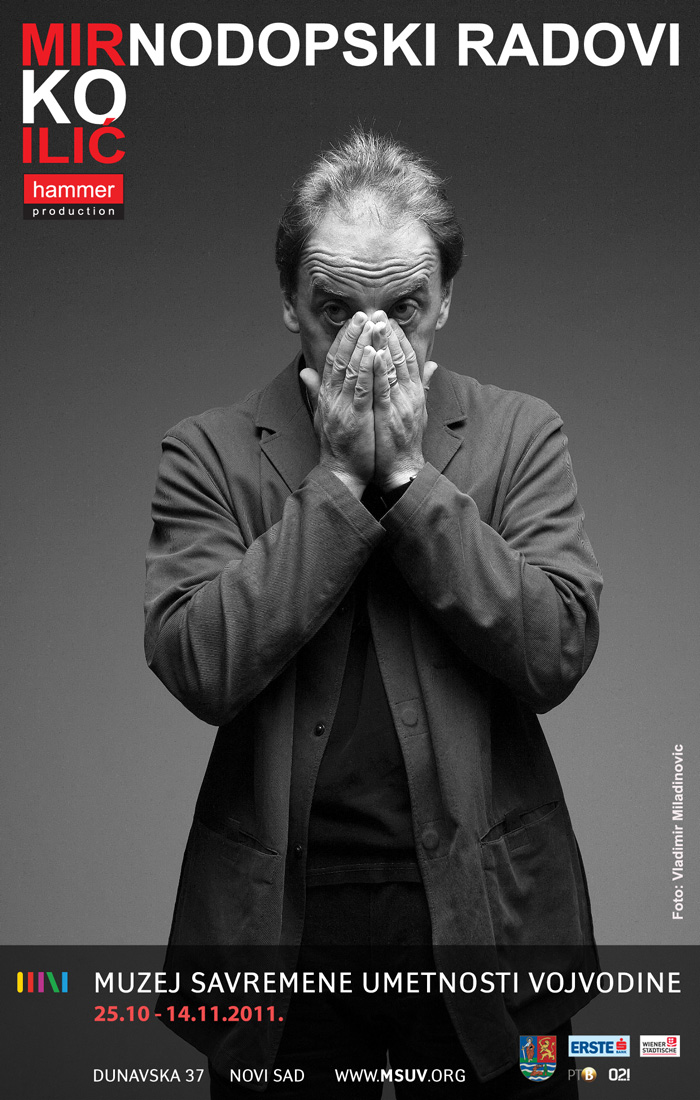
Curator of the Museum of Modern and Contemporary Art Rijeka Sabina Salomon introduces a famous international artist Mirko Ilic at The Museum of Contemporary Art Vojvodina, Novi Sad on 25th October – 14th November, 2011.

“The exhibition THE PEACE WORKS – Mirko Ilic – Retrospective: comics / illustration / design / multimedia 1975-2011 is an artistic event that will give the audience a chance to get acquainted with the previous works of this author. Mirko Ilic published his first works in 1973, and since then has been publishing comics and illustrations in magazines, such as Omladinski tjednik, Modra Lasta, Tina, Pitanja; he has become the art and comics editor of the students’ magazine Polet in 1976. He helped to organize an informal organization of the comic book creators Novi kvadrat (The New Square), that has been widely connected to the Novi val musical movement in Zagreb.

In 1986 he left Yugoslavia and went to New York “with $1,500 in the pocket and no idea what to do upon getting there.” He soon started publishing his illustrations in Time, The New York Times, Los Angeles Times, Wall Street Journal, and many other prominent and influential newspapers and magazines. In 1991, he became art director of Time International, and the following year he became art director of the op-eds in The New York Times. In 1993, Ilic became one of the co-founders of Oko & Mano Inc. graphic design studio, and in 1995 he founded Mirko Ilic Corp., a graphic design and 3-D computer graphics and motion picture title studio. In 1998, he created the title sequence for the romantic comedy You’ve Got Mail.”

MV

Source:

msuv.org

mirkoilic design

Renowned pianist McCoy Tyner will open the 7th annual VIP Zagreb Jazz Festival on 10 November. The festival will take place in freshly renovated Student Centre hall that can seat 1,000 people. The highlights of this year’s festival are Pat Metheny Trio, Lucky Peterson and sax player Pharoah Sanders.

McCoy Tyner Trio featuring Jose James & Chris Potter

A Contemporary Exploration of John Coltrane & Johnny Hartman

McCoy Tyner – piano, Gerald Cannon – bass, Joe Farnsworth – drums, Jose James – vocals, Chris Potter – saxophone

Pat Metheny Trio/ 11th November

w/Larry Grenadier & Bill Stewart

Pat Metheny – guitar, Larry Grenadier – bass, Bill Stewart – drums

Lucky Peterson

Lucky Peterson – Vocals, Guitar, Rhodes, B3 Organ, Raul Valdes – Drums, Timothy Waites – Bass

Pharoah Sanders Quartet

Pharoah Sanders – Tenor Saxophone, Gregory Bandy – Drums, John Webber – Bass, William Henderson – Piano

This year the special star – Pat Metheny, throughout his career, has continued to re-define the genre by utilizing new technology and constantly working to evolve the improvisational and sonic potential of his instrument.

MV

Source:

culturenet

vip zagreb jazzfestival

http://www.patmetheny.com

The prestigious American media “The Village Voice” presents Croatian curatoring of Branko Franceschi’s exhibition “Tune in Screening: Psychodelic Moving Images from Socialist Yugoslavia 1966-1976” as the best or Top Arts story in New York at the moment.

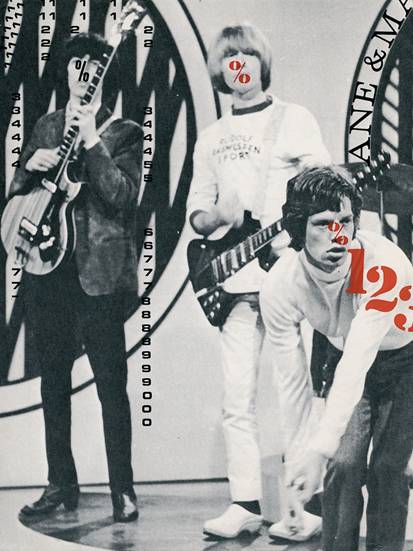
A journalist R.C. Baker explains: “Post-World War II Yugoslavia threaded a Cold War needle between the Soviet Union’s Communist hardliners and the West’s hedonistic capitalists. This national schizophrenia perhaps explains the fantastic flowering of proto-MTV films and conceptual objects created by the Slovenian avant-gardists known as the OHO Group. In 1968, an OHO founder, Marko Pogacnik, crafted a puzzle by slicing up a photo of the Rolling Stones and gluing the pieces to a dozen matchboxes. In a recent interview, the artist summed up his affecting object (which opens the exhibition): “In the same way that matches appear when one needs to build the fire, pop culture ignited our imagination.”(…)”

Although the journalist Baker writes about the cultural moment of the analysed period in the exhibition, we think that he missed so much regarding philosophy and curatorial capacity.

MV

Source:

http://www.villagevoice.com

The Perforations Festival program spans over three cities (Rijeka, Zagreb, Dubrovnik) from October 20 – 29, 2011. The festival includes more than 15 other productions from Slovenia, Serbia, Macedonia and Romania. Some of the artists are Rosana Hribar / Gregor Luštek, Mala Kline, Angelo Madureira / Ana Catarina Vieira, Manuel Pelmus, Ljiljana Tasić / Dušan Bročić, Damir Bartol Indoš, Via Negativa, etc.

The Perforations Festival takes place annually in three Croatian cities; Zagreb, Rijeka and Dubrovnik and presents a range of artists working in performance art, theater, and dance, whose diverse approaches to art-making blurs the borders between these genres. While their work touches upon issues of identity (public, political, religious, ecological),  of borders redefinition and space, of a collective past, and of personal histories, most of all their work talks about the present. Highlights from this festival were presented at the LaMama E.T.C., New York, offering audiences insight into contemporary lines of artistic thinking from some of the most provocative and influential artists in the region.

This week they have published interviews with Marko Mandić, Tea Tupajić and Alen Sinkauz.

MV

Source:

http://www.perforacije.org